Canadian Winter Wonderland
As a family, our favorite TV show to watch together is Alone. After watching Season 7 a few years ago, I learned that one of the contestants, Kielyn Marrone, and her husband Dave, offered backcountry winter camping expeditions in the Canadian wilderness through their business Lure of the North. After reviewing their very thorough website, I was in! Participating on one their trips would be a bucket list experience. An adventure with Kie and Dave I knew would be challenging, memorable, eye opening, and probably very cold. So I took the plunge and signed up not knowing what it would be like or who I’d meet. It was absolutely worth it!
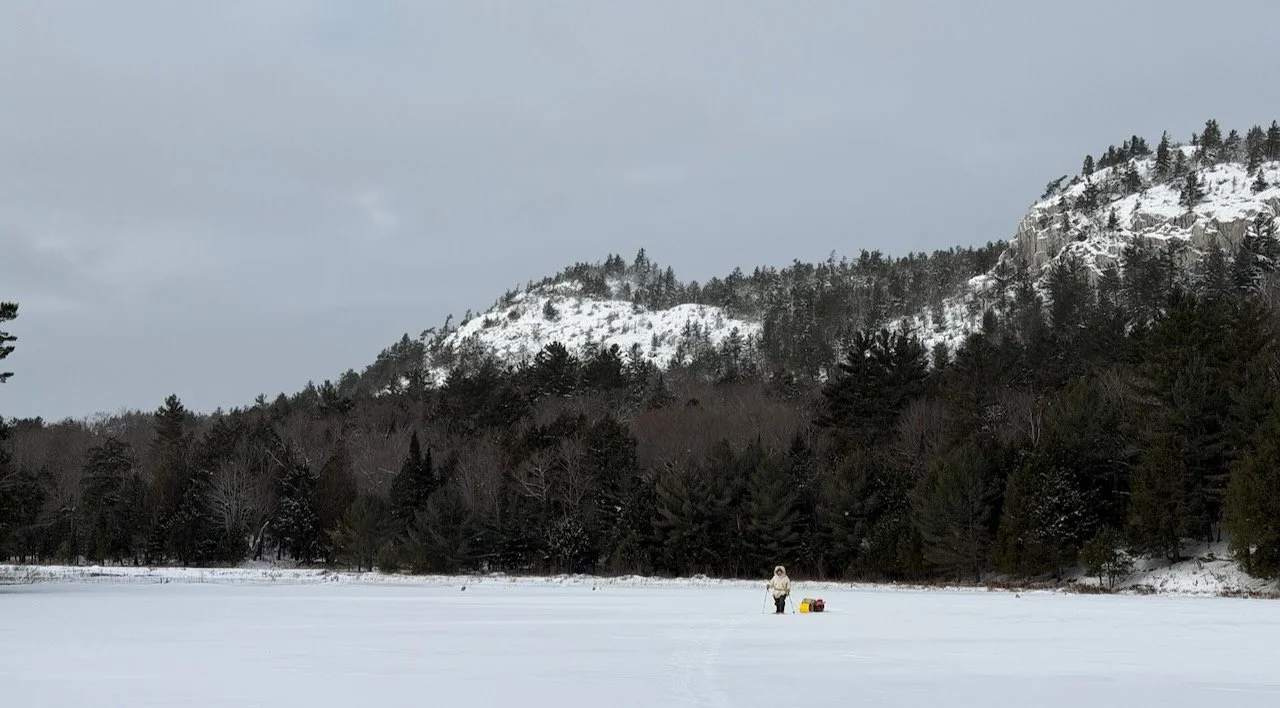
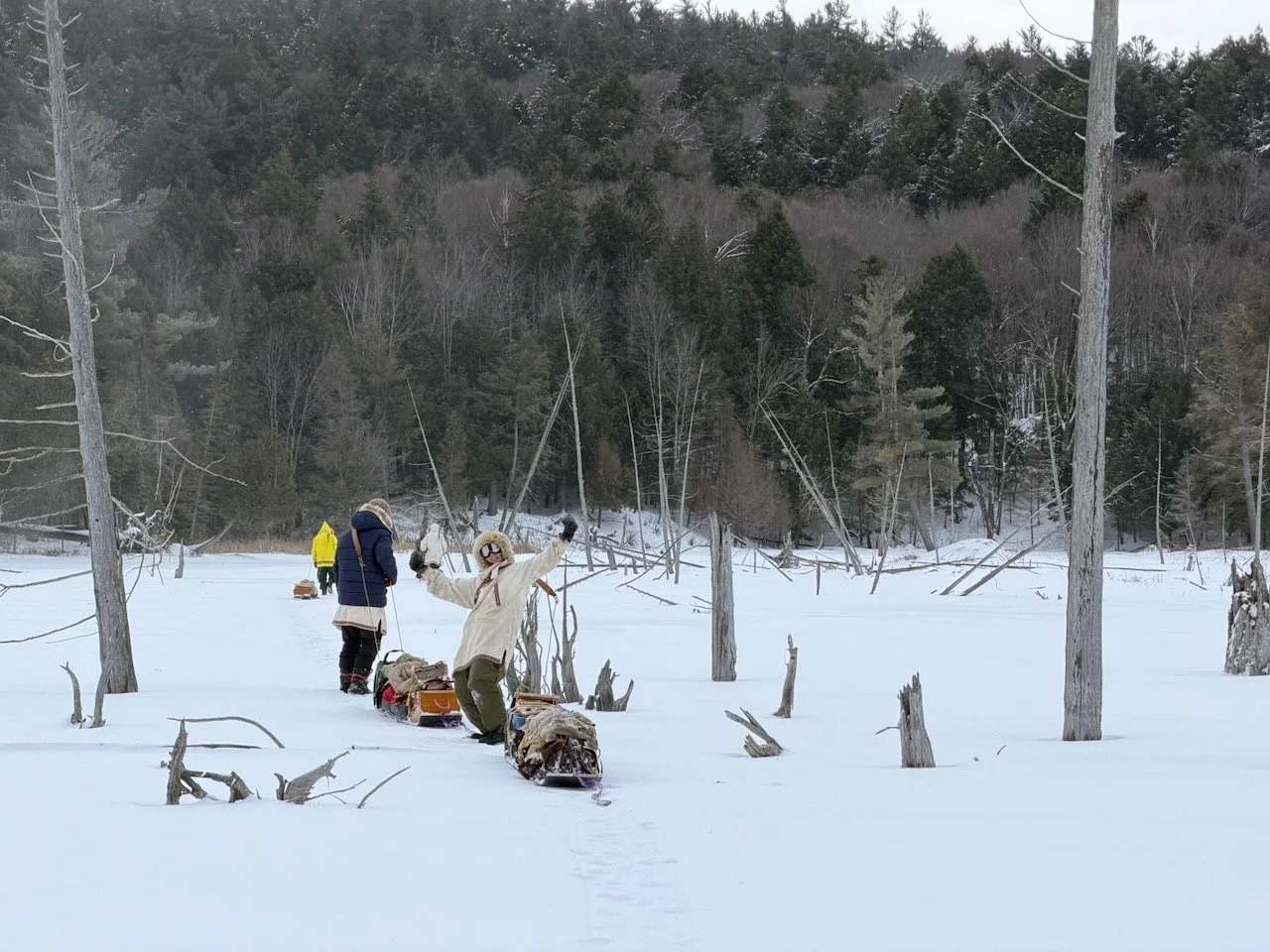
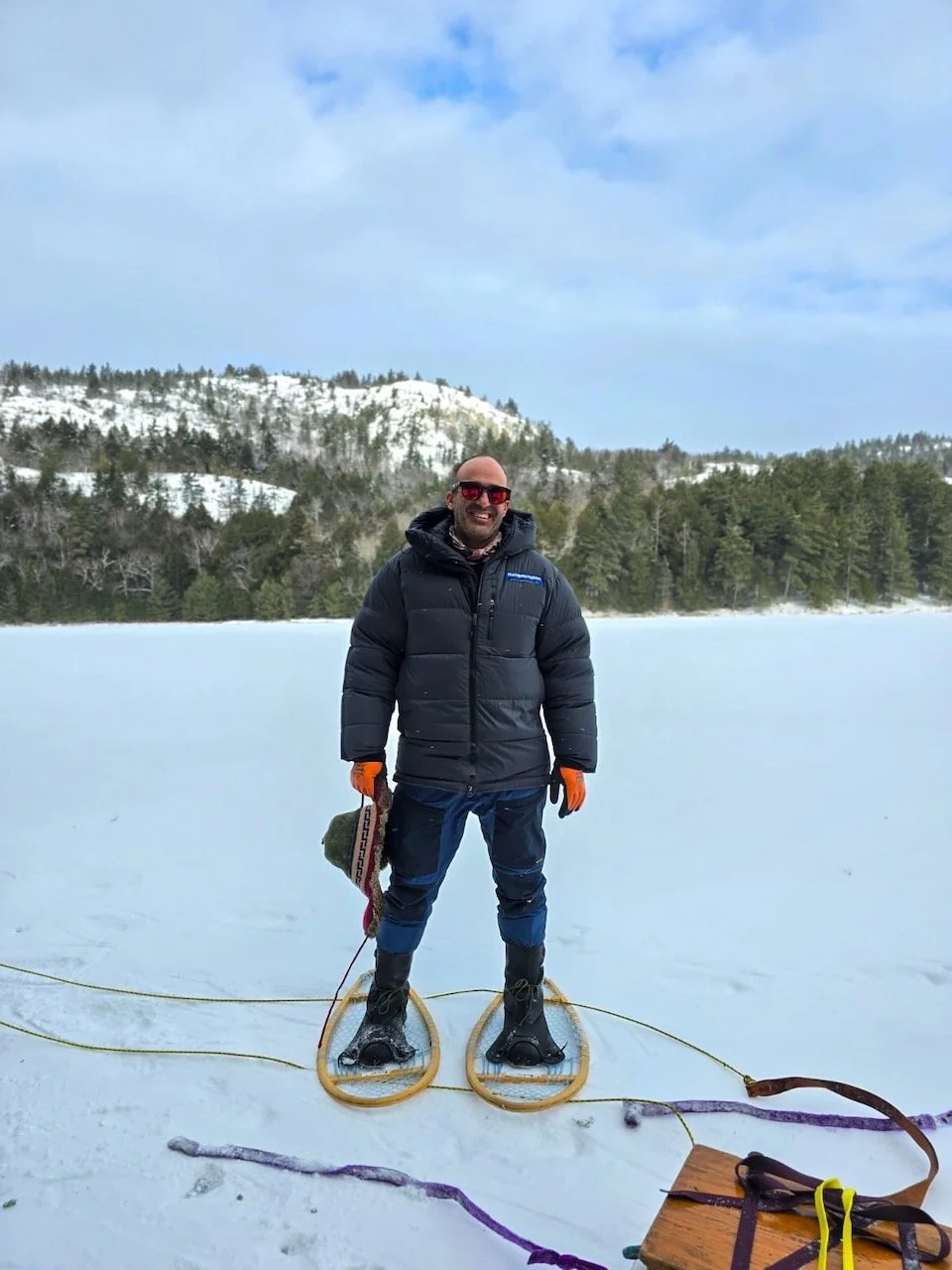
Crossing the ice sheet on one of the several lakes we traversed.

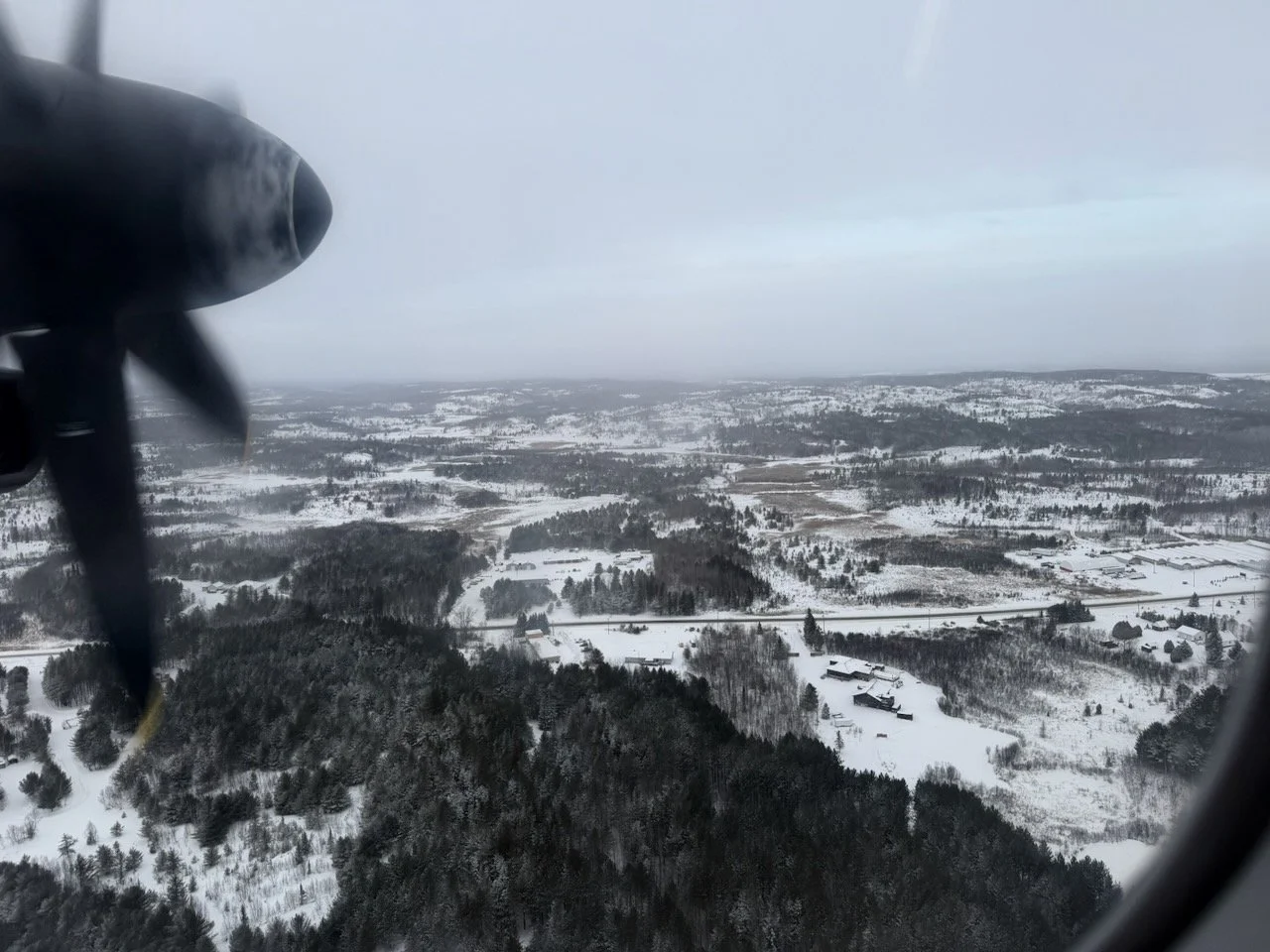
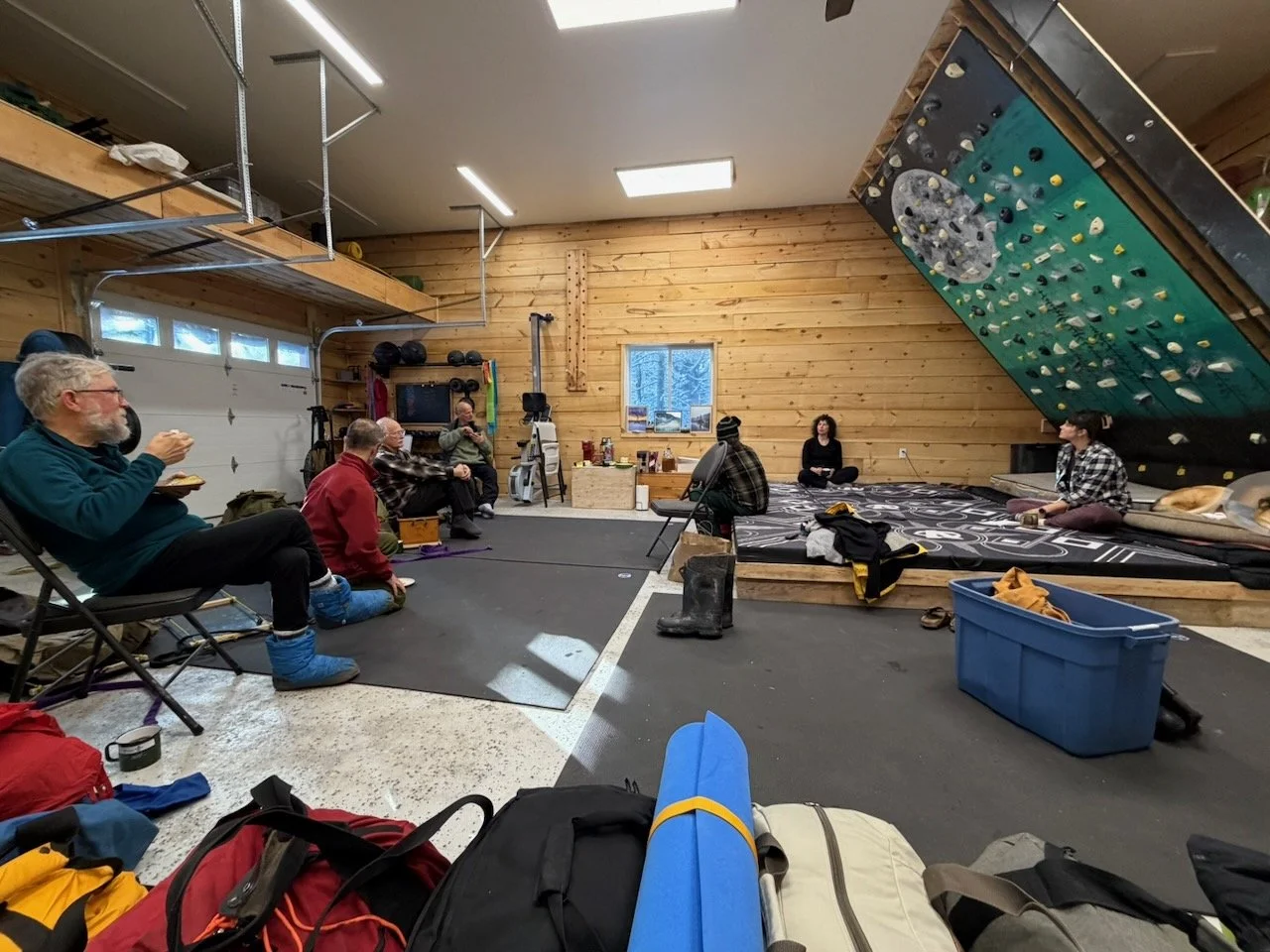
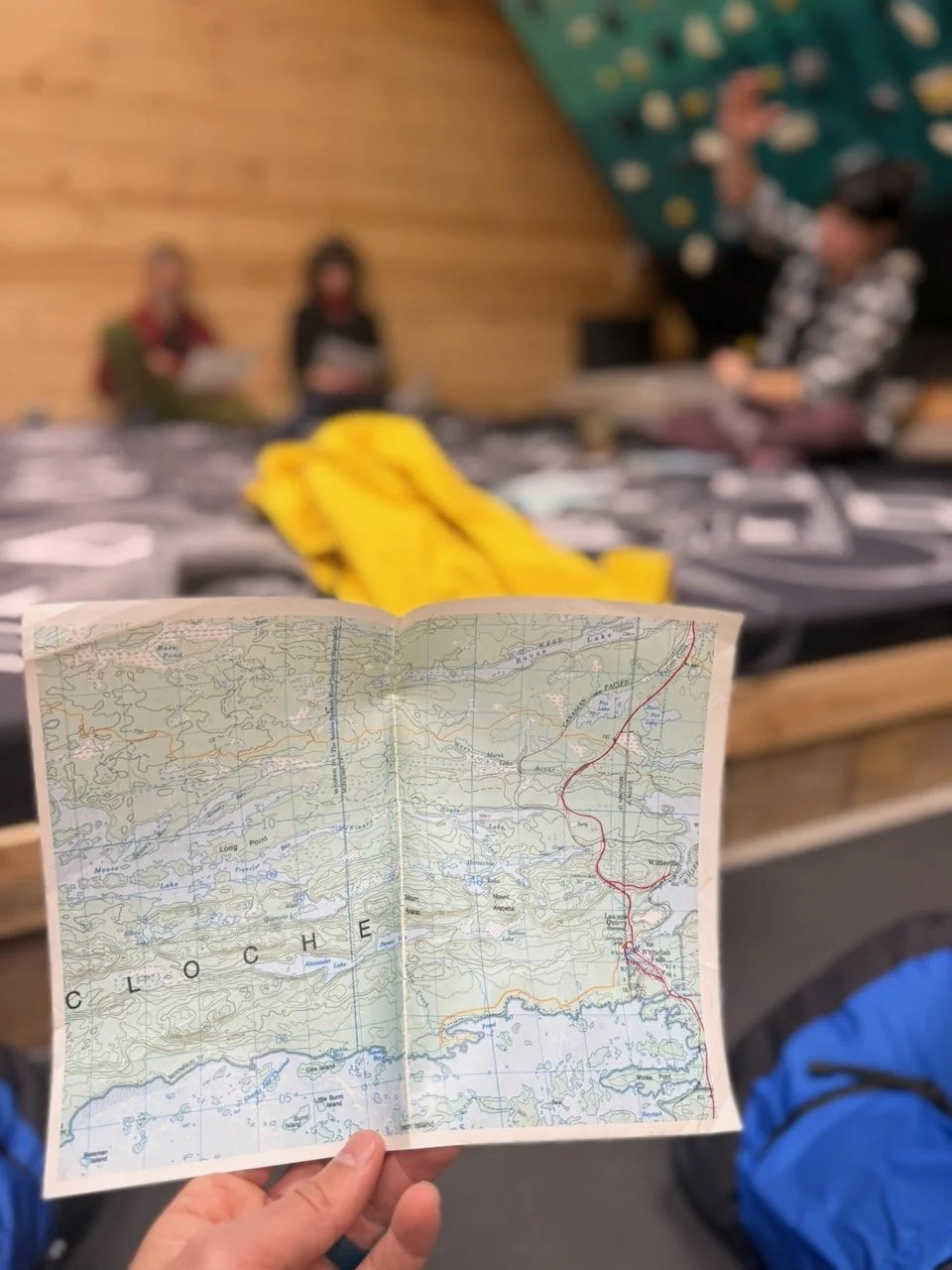
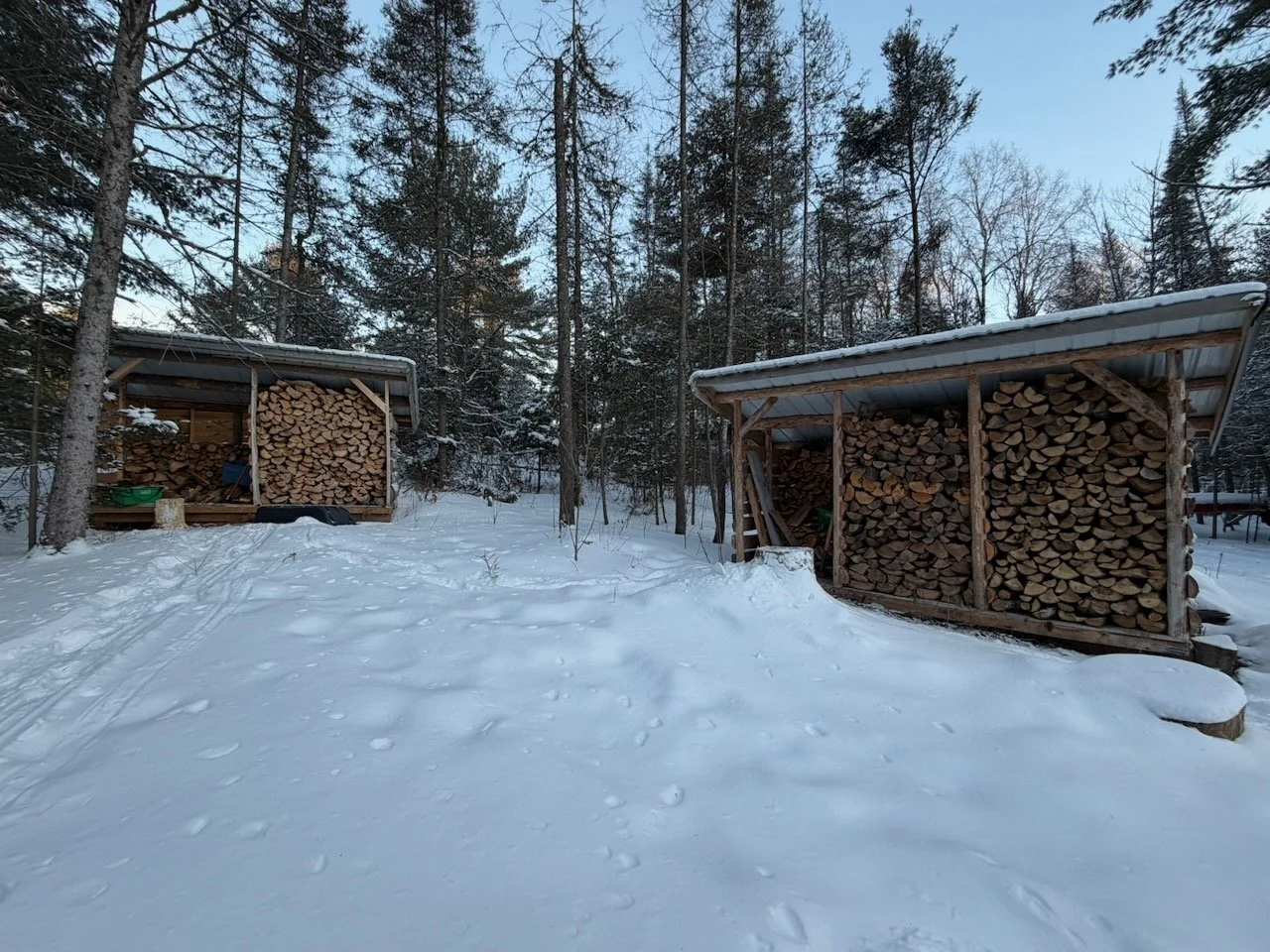
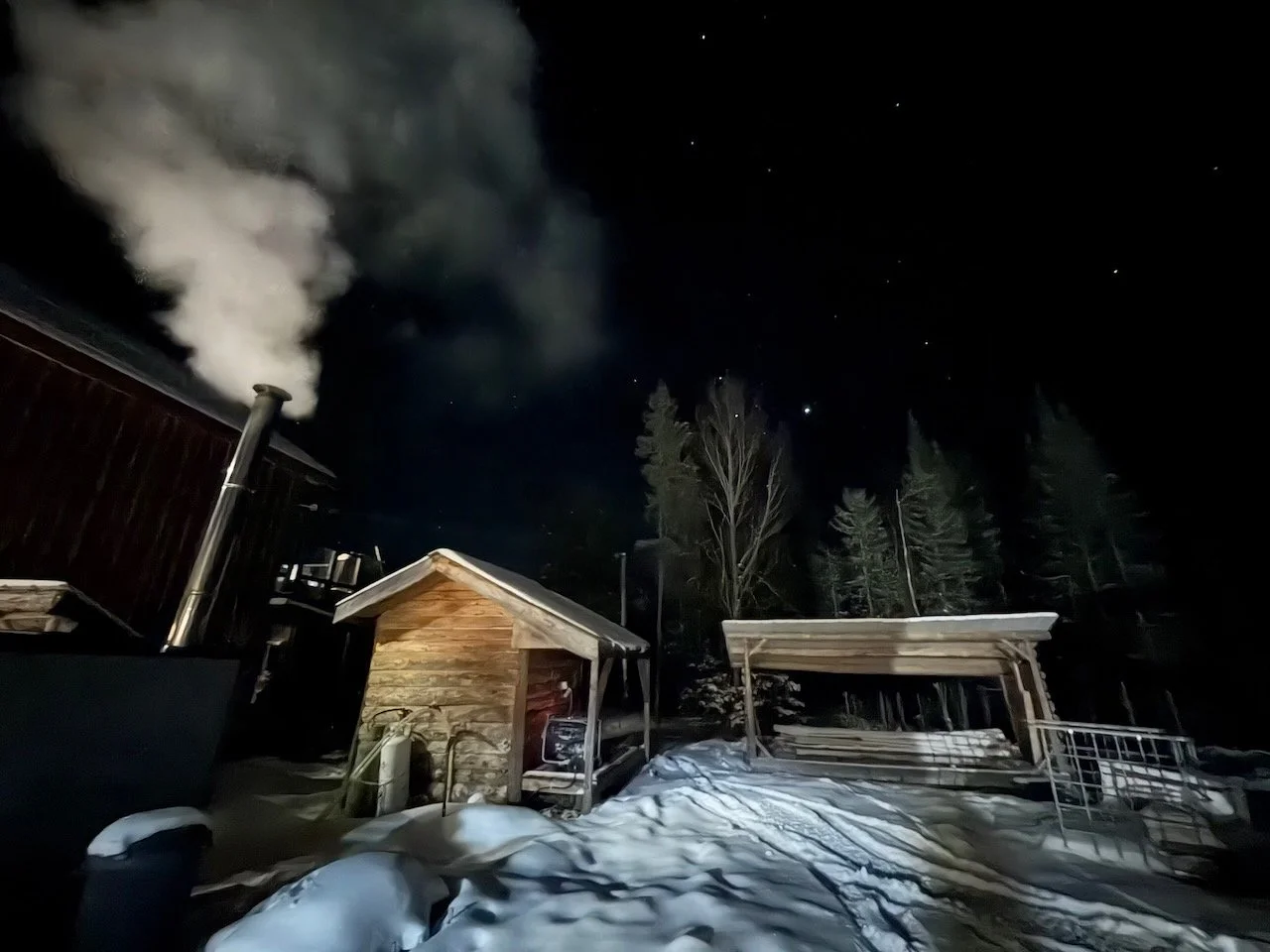
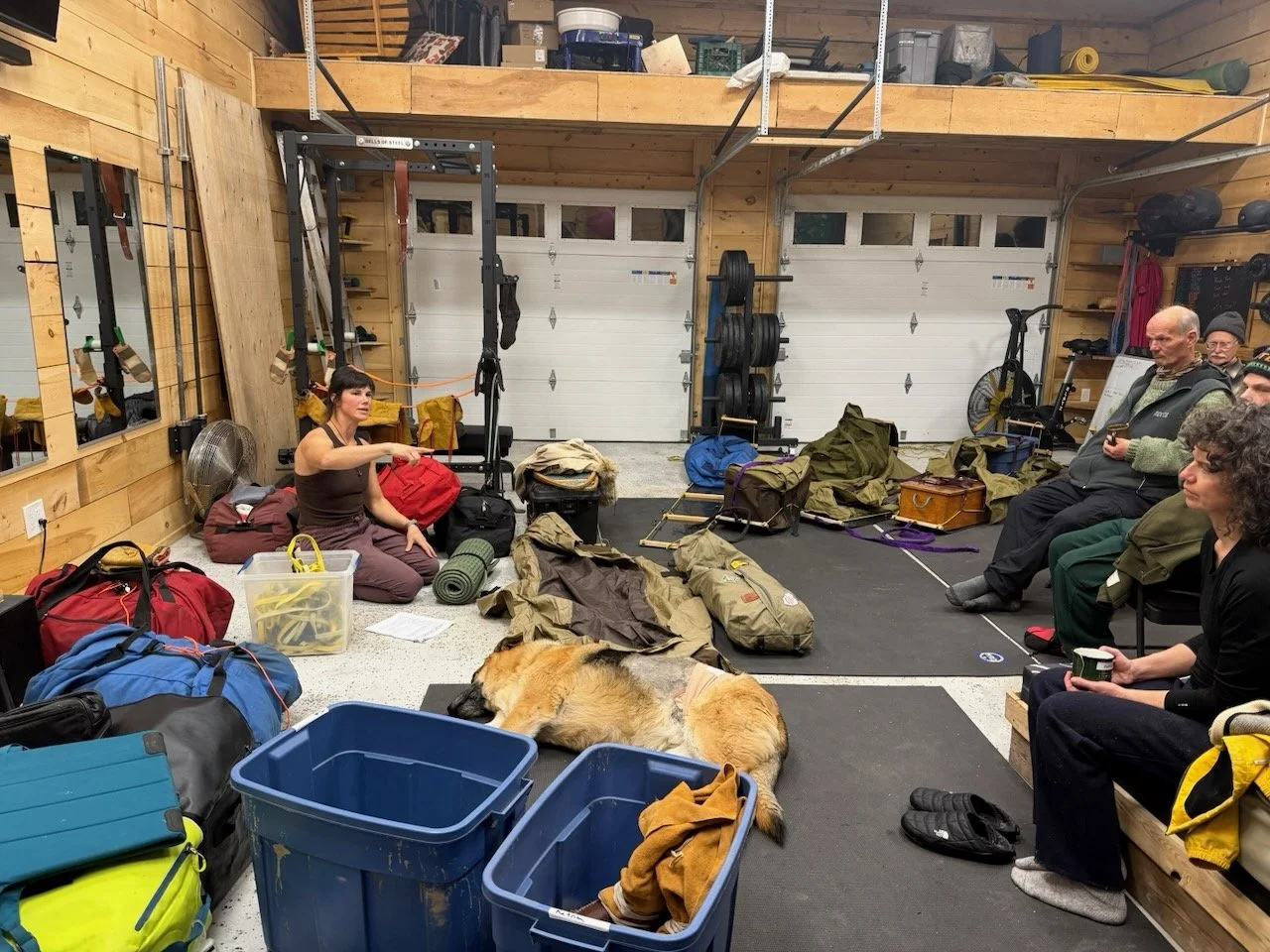
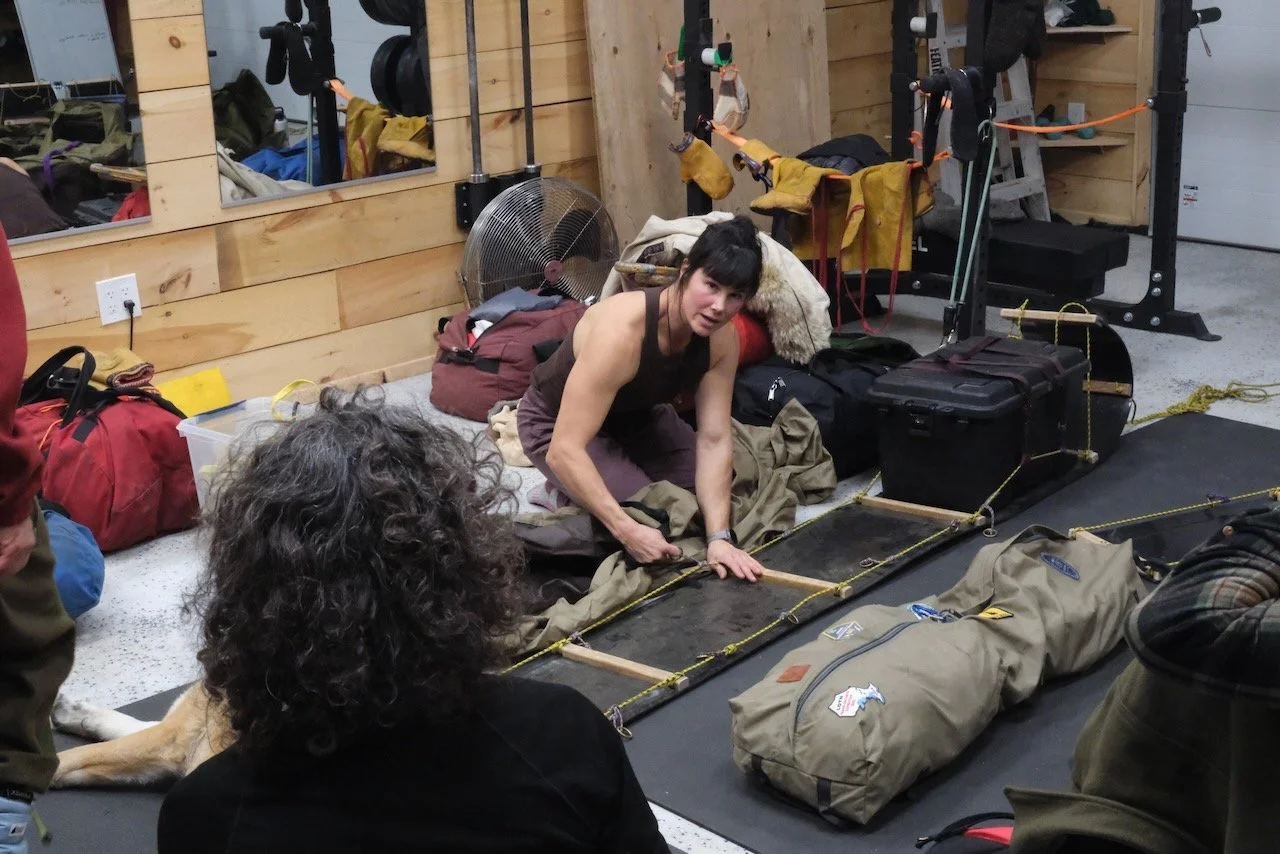
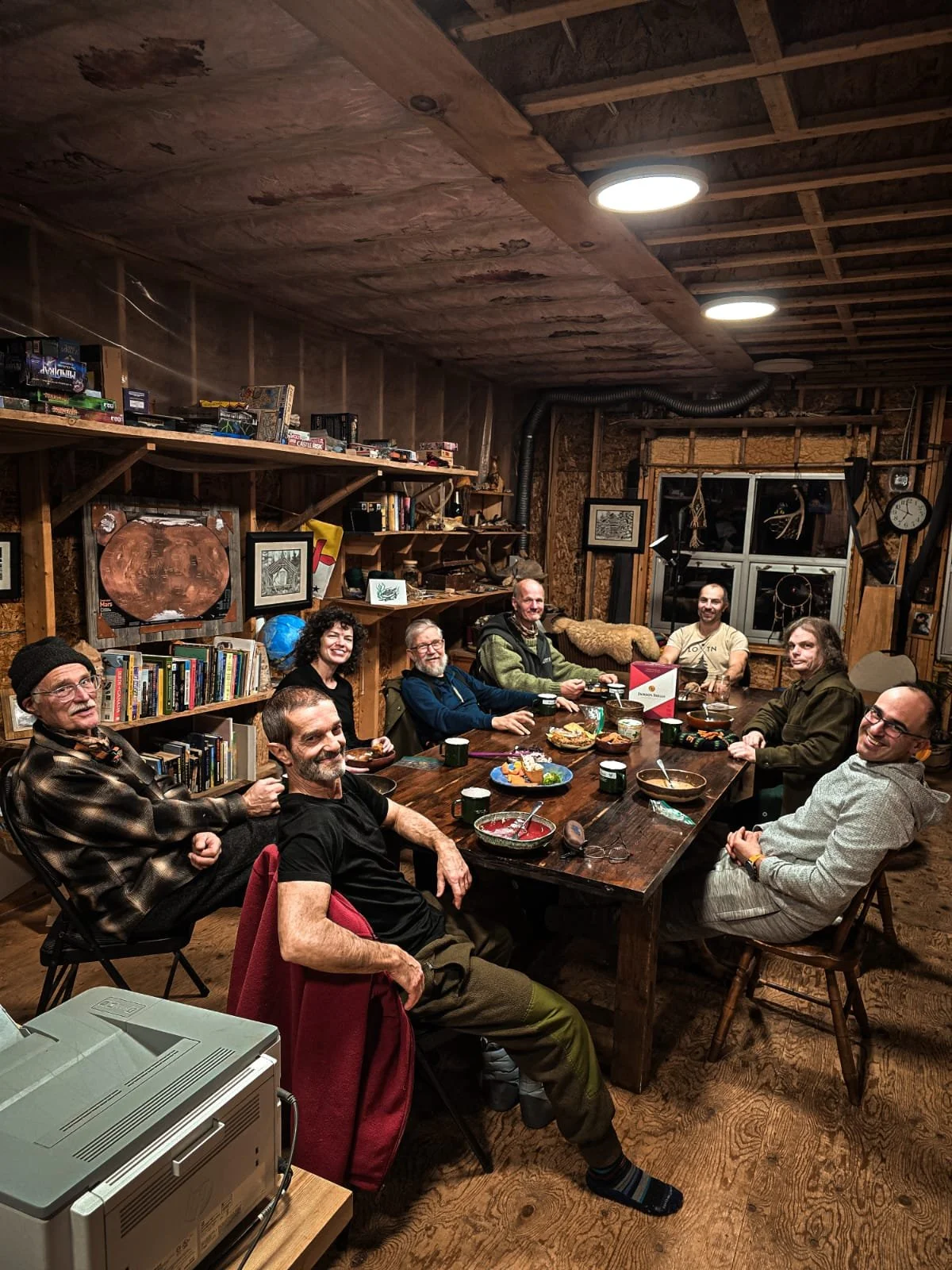
Our first night we spent at Dave and Kie’s cabin kind of near Española, a very small town an hour and a half from another slightly larger small town called Sudbury, which is where I flew into via Toronto. Entirely off grid, in their first three years owning their slice of heaven they lived in a tent. Year round, as in, through three winters! Then they built a cabin which is their home, plus a garage with a climbing wall, exercise equipment, and all the tools they regularly need to live in the woods. Their ‘outhouse’ was a cool wood box with a foam seat surrounded by trees, and I must say from personal experience despite sitting on the foam with a temp around 10 degrees, it was comfy.
For the first night, we laid out our gear and packed our toboggans for the next morning’s early wake up at 6 am.
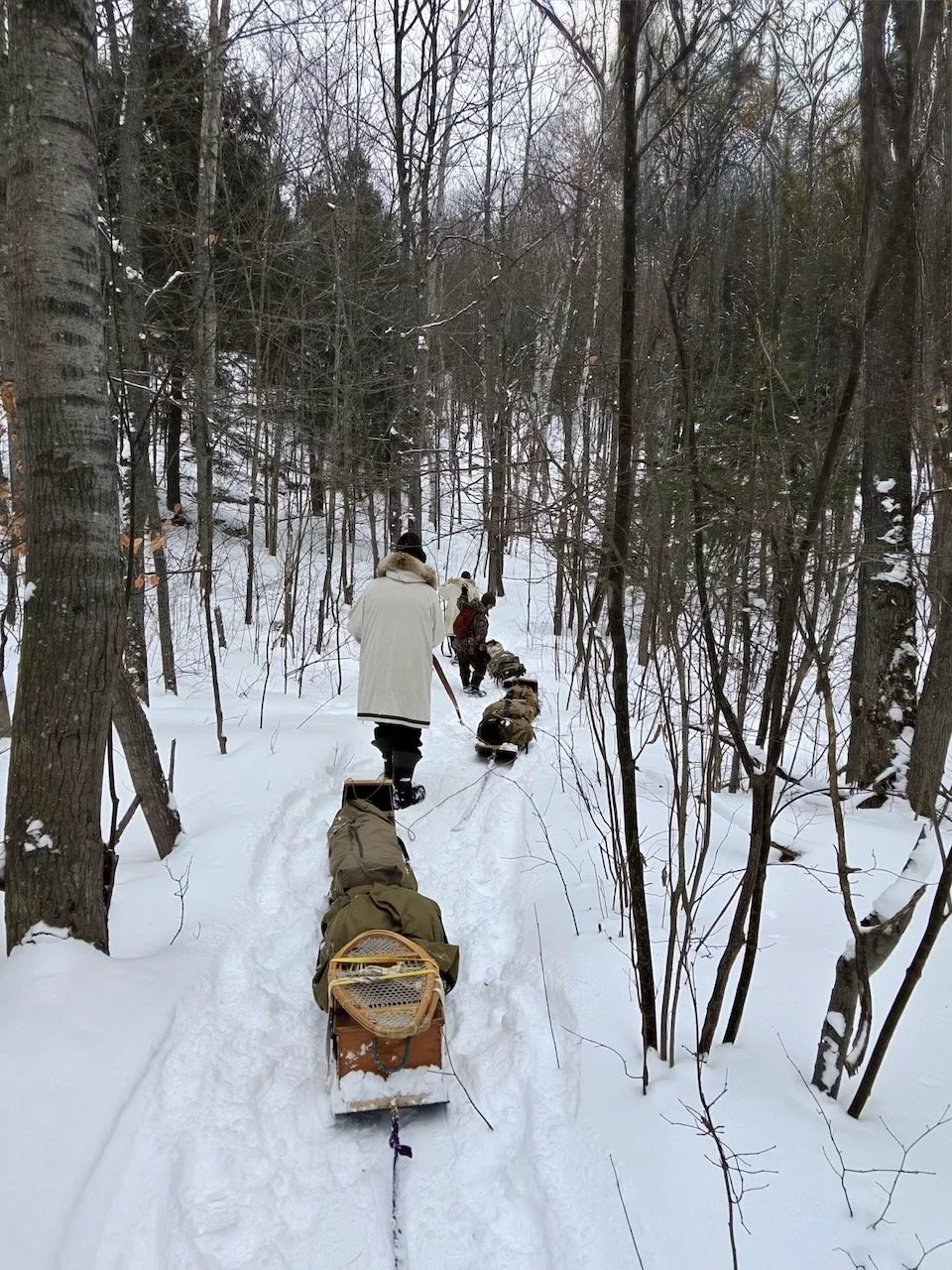
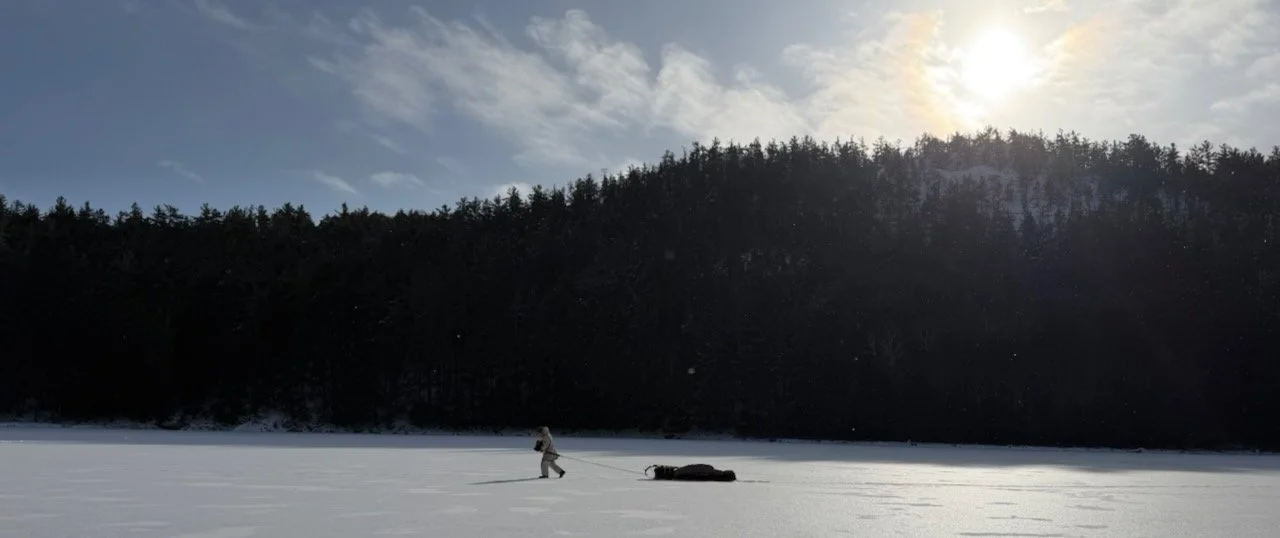
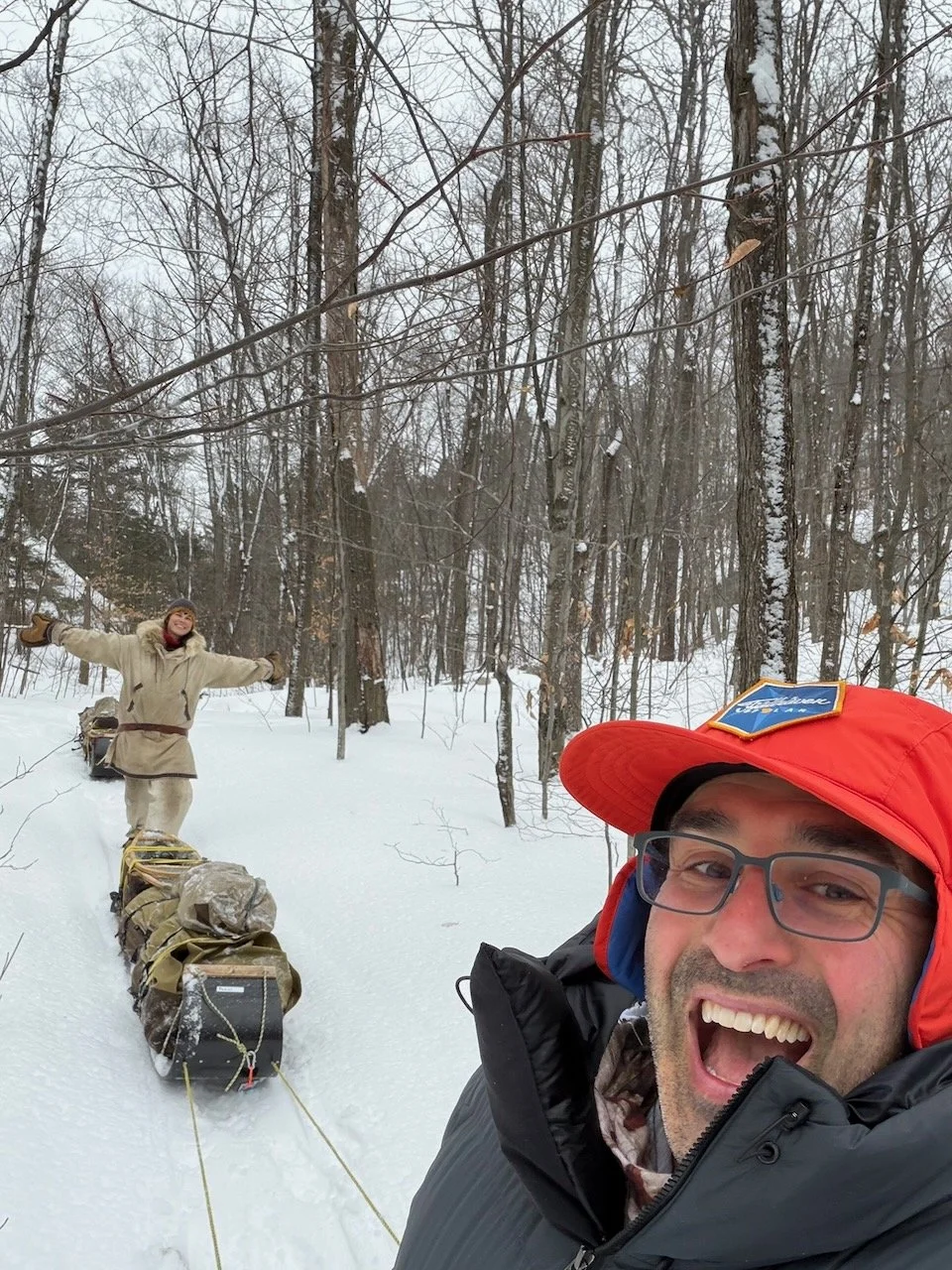
Most of the time we snowshoed on frozen lakes but a couple times we portaged across land. As easy as it was to pull the toboggans on ice, it was super hard to pull them up a hill on land. You’d think it was easy to navigate them down a little hill, but I did wipe out once too and accidentally took out Bill at the same time.
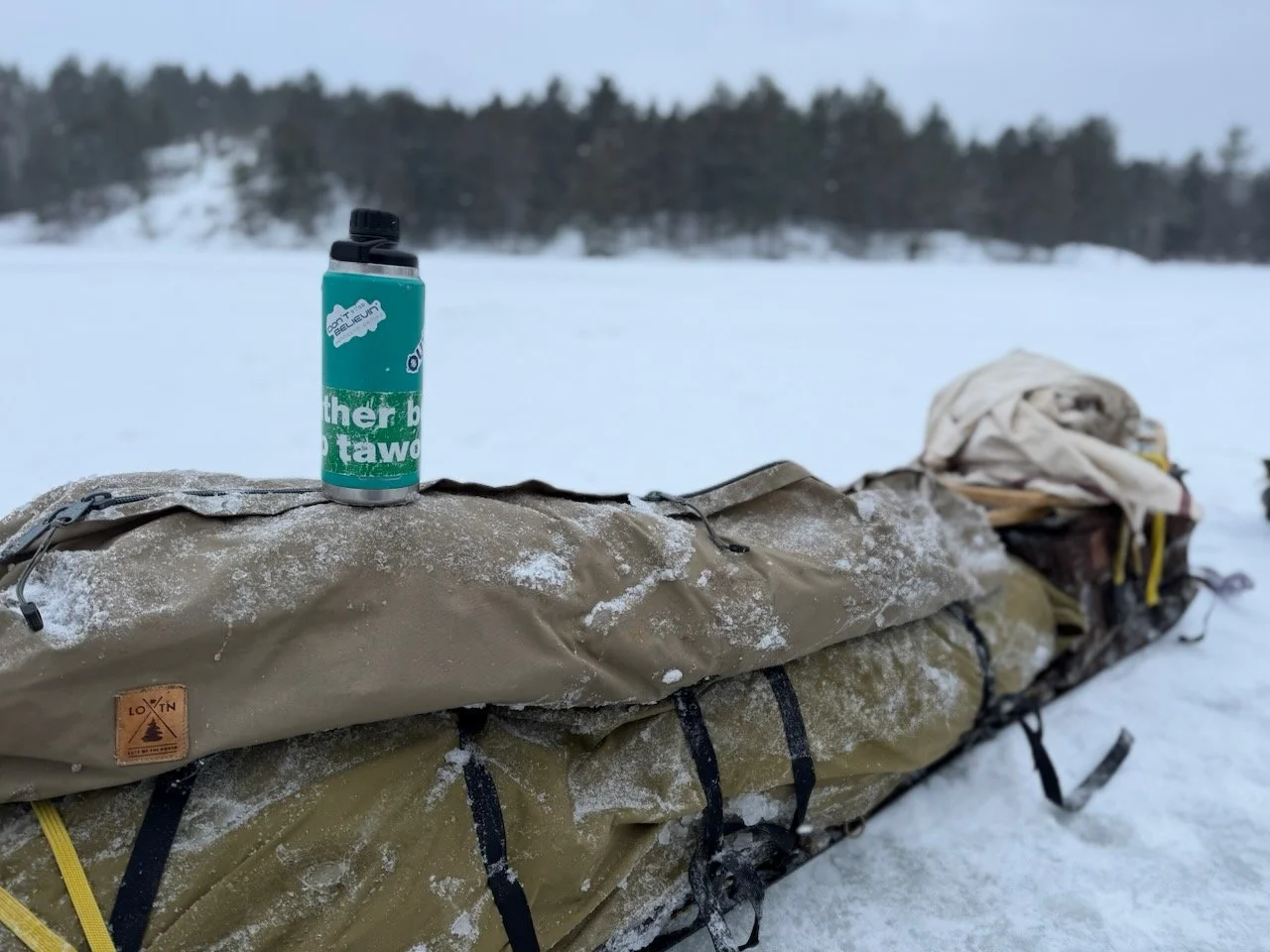
In my toboggan, in addition to a duffel bag with my gear, I had a three person tent plus a stove. The topbag (the bag on top of the big bag) was for items that we’d want to easily access when in motion.
At night, we turned the toboggans on their sides so they wouldn’t freeze to the ice. At rest stops if we were there too long, we’d use an ice scraper on the bottom to remove ice to have less friction when pulling. That was also a good time to put on our down jackets to stay warm during a pause.
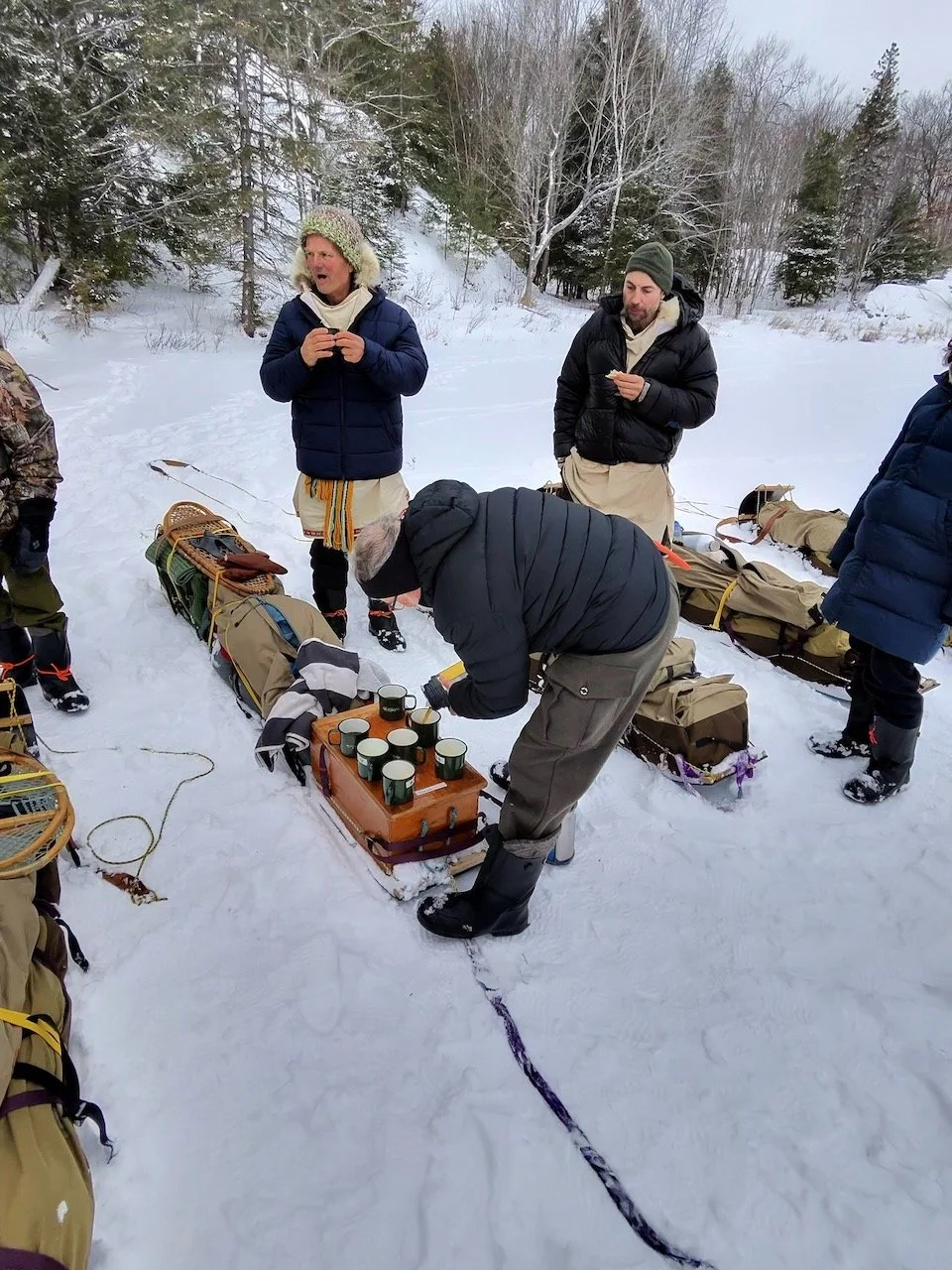
Tea time on the ice. Below, how I cleaned my cup after enjoying some mushroom soup.
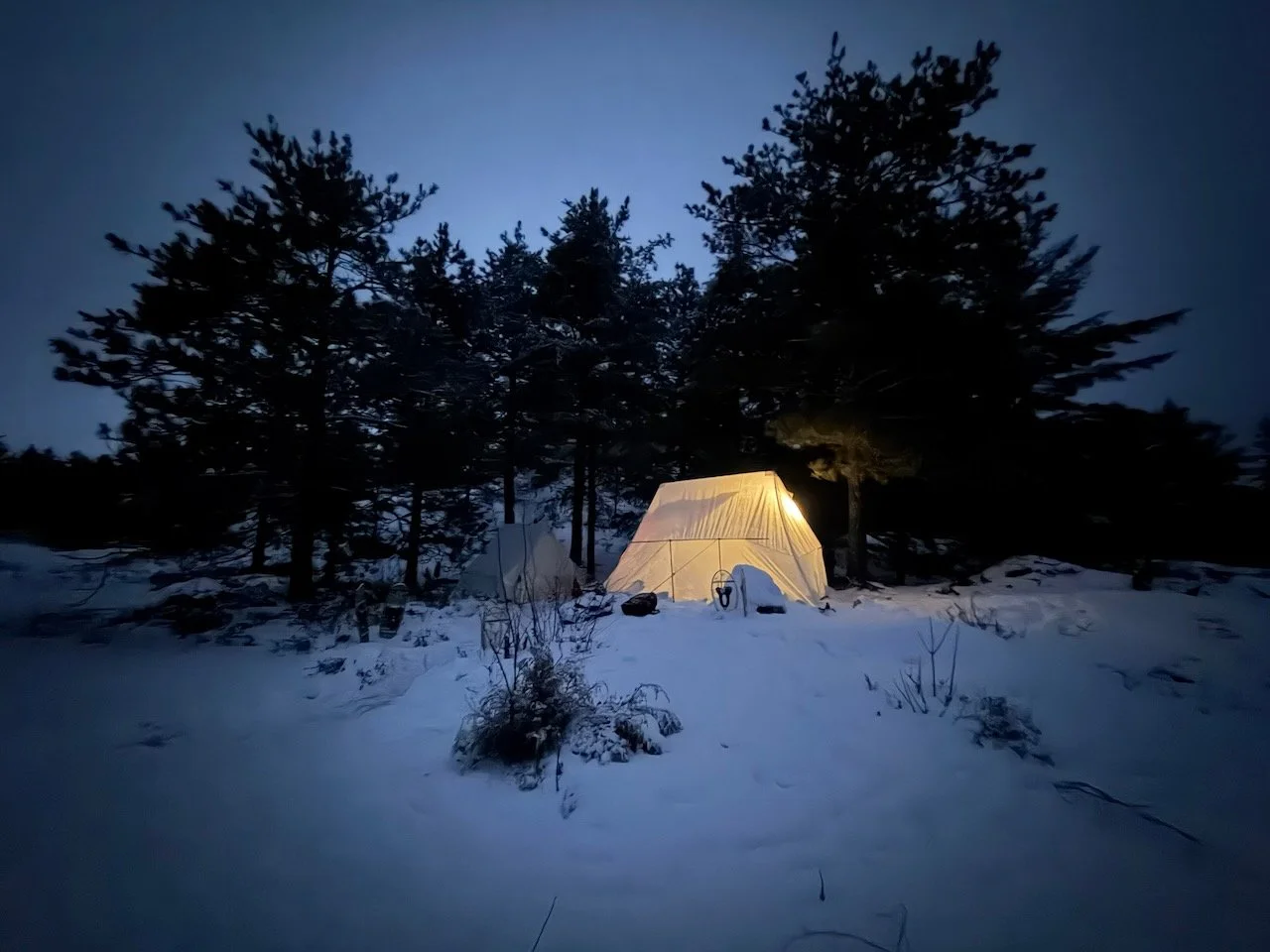
Winter wonderland is right. The only thing missing here were the stars. It was too foggy given the weather conditions.
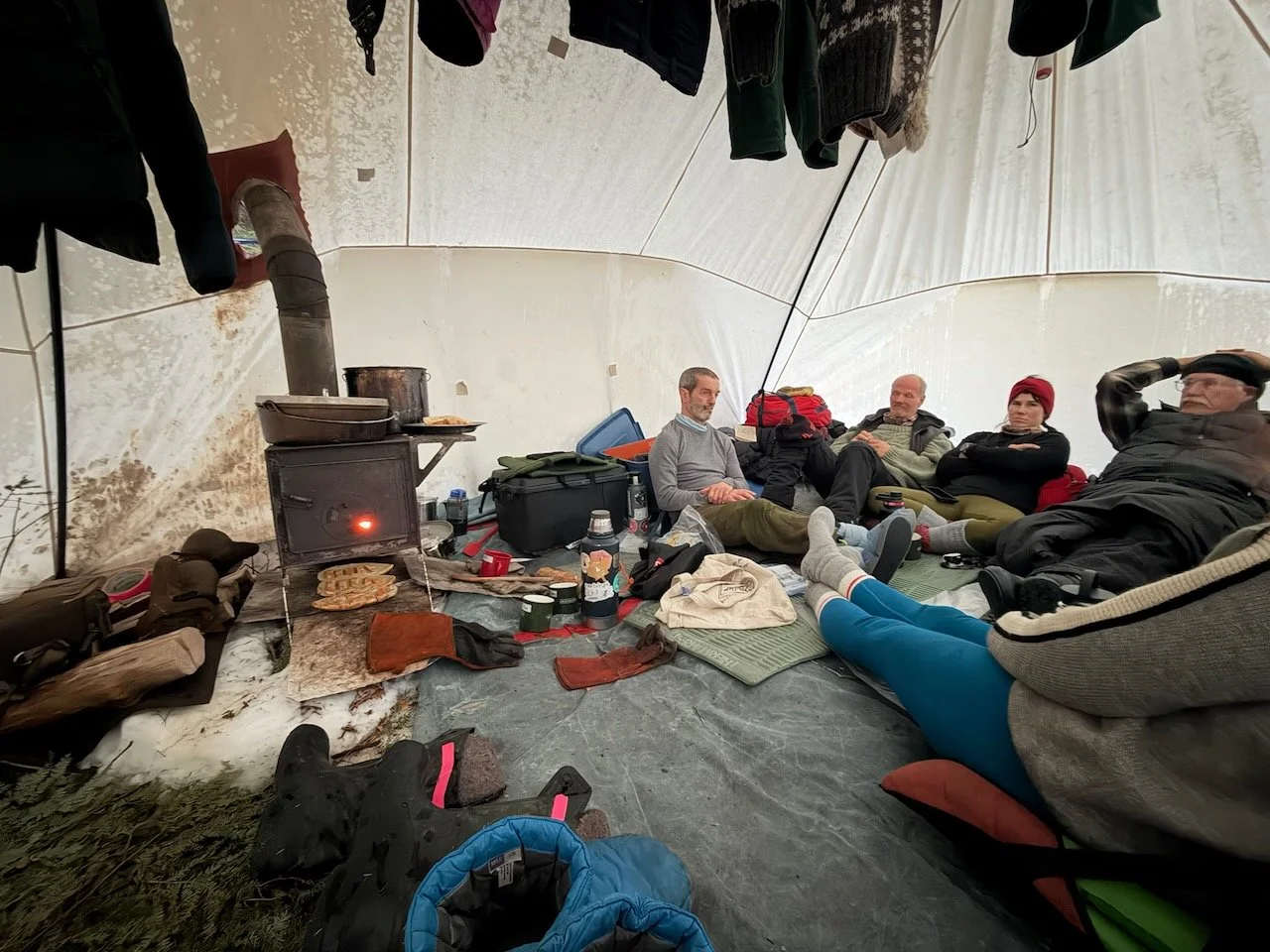
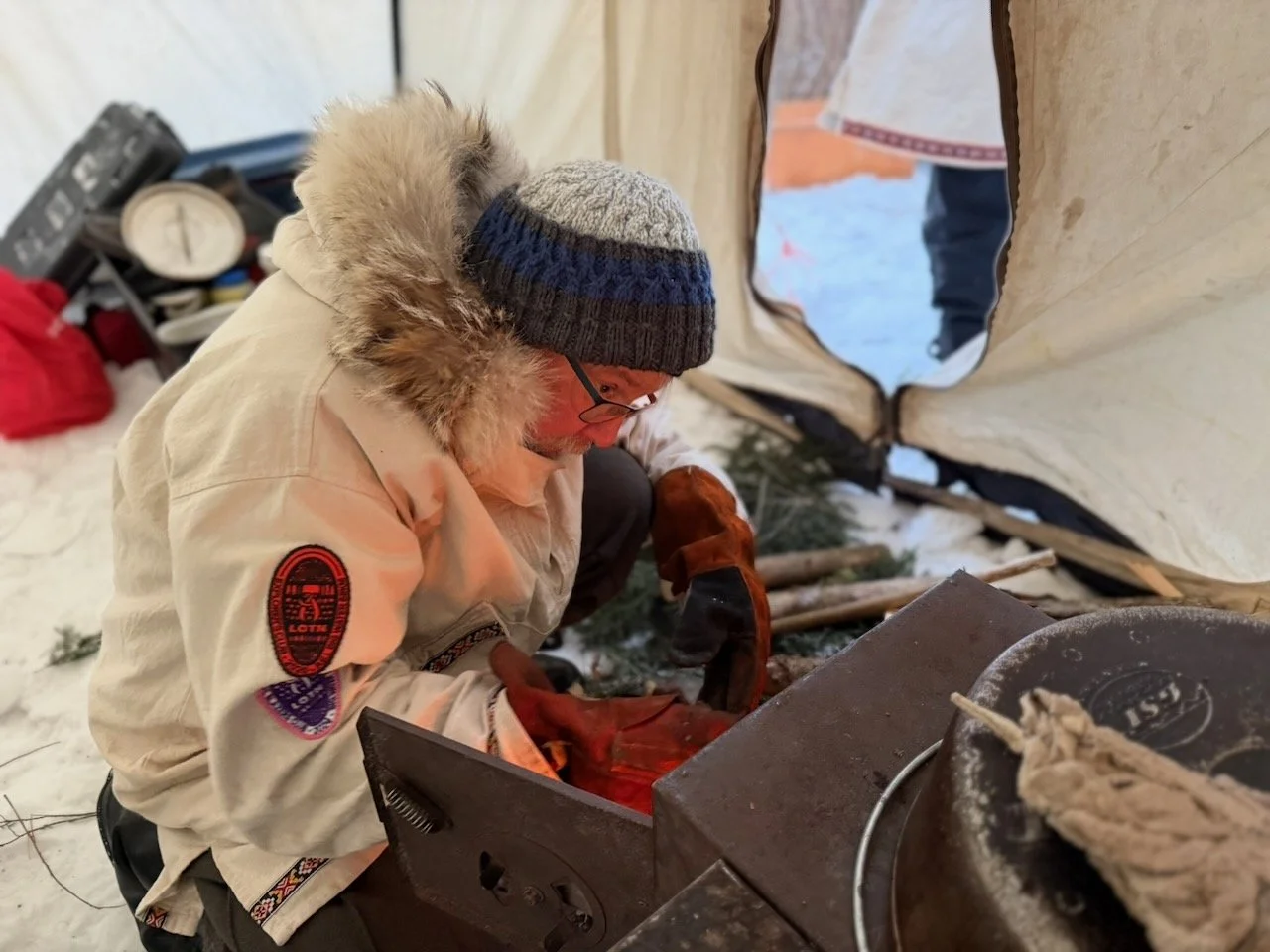
Inside the Snow Trekker tents. Now you can see that wood burning stove there. It needs to be fed every hour or two to maintain the heat in the tent, but during the night, only every three-ish hours, if you don’t want the air to be too freezing. My first night I was the “stoker” meaning I set my alarm for midnight and 3 am to pop some more wood in the fire. At 11:50 pm though I woke up a little early to Bill trying to stoke the fire and blowing on the one last ember. He seemed like a pro with it so I just quietly observed him bring the fire back to life. Definitely a cool experience.
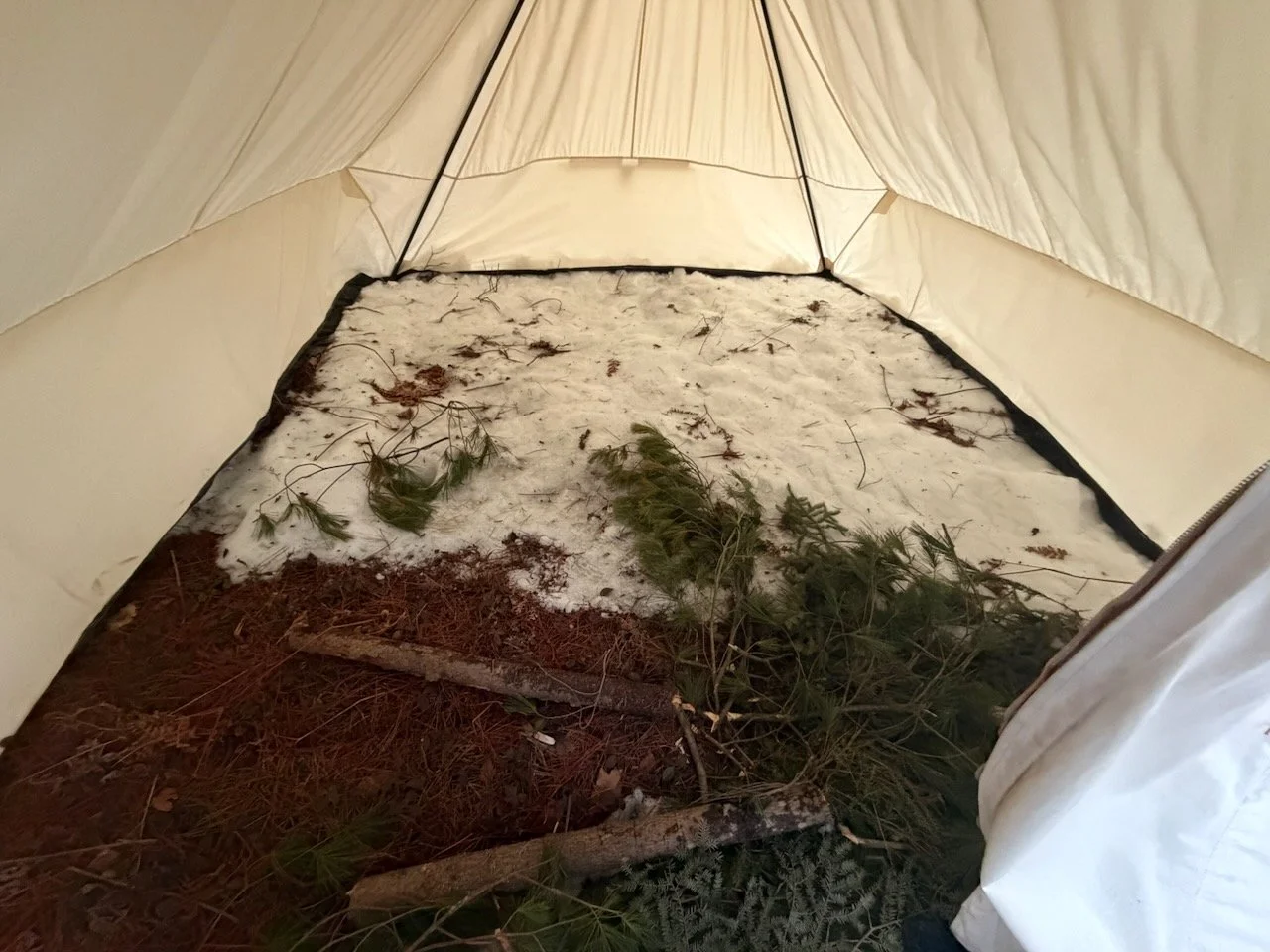
This is the inside of the tent. Snow floor and some boughs which are the green parts of the tree - they make a great floor for the entrance.
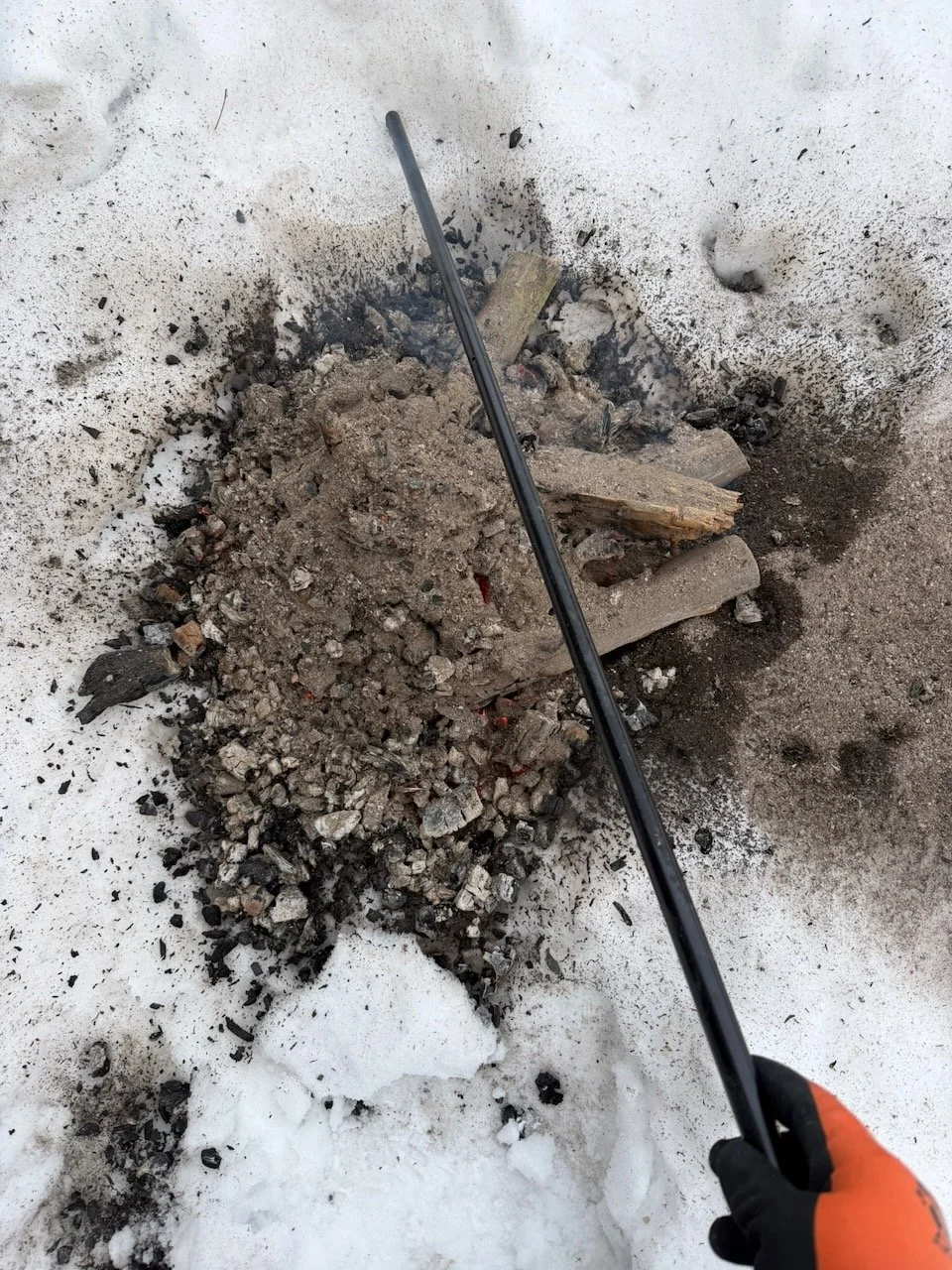
When disassembling the tents, it was so cold that each section of the poles froze together. It was too hard to pull them apart, but luckily they loosed up after a few seconds over the coals. That night I think it was around zero degrees. Not our coldest night. When I’d comment on the cold weather the Canadians took the opportunity to remind me that it was a warm day. Although I did want it to get pretty cold to test out my gear, and I got my wish on my last night when it dipped down to 15 degrees below zero. I was still sweating in my -20 Feathered Friends bag though.
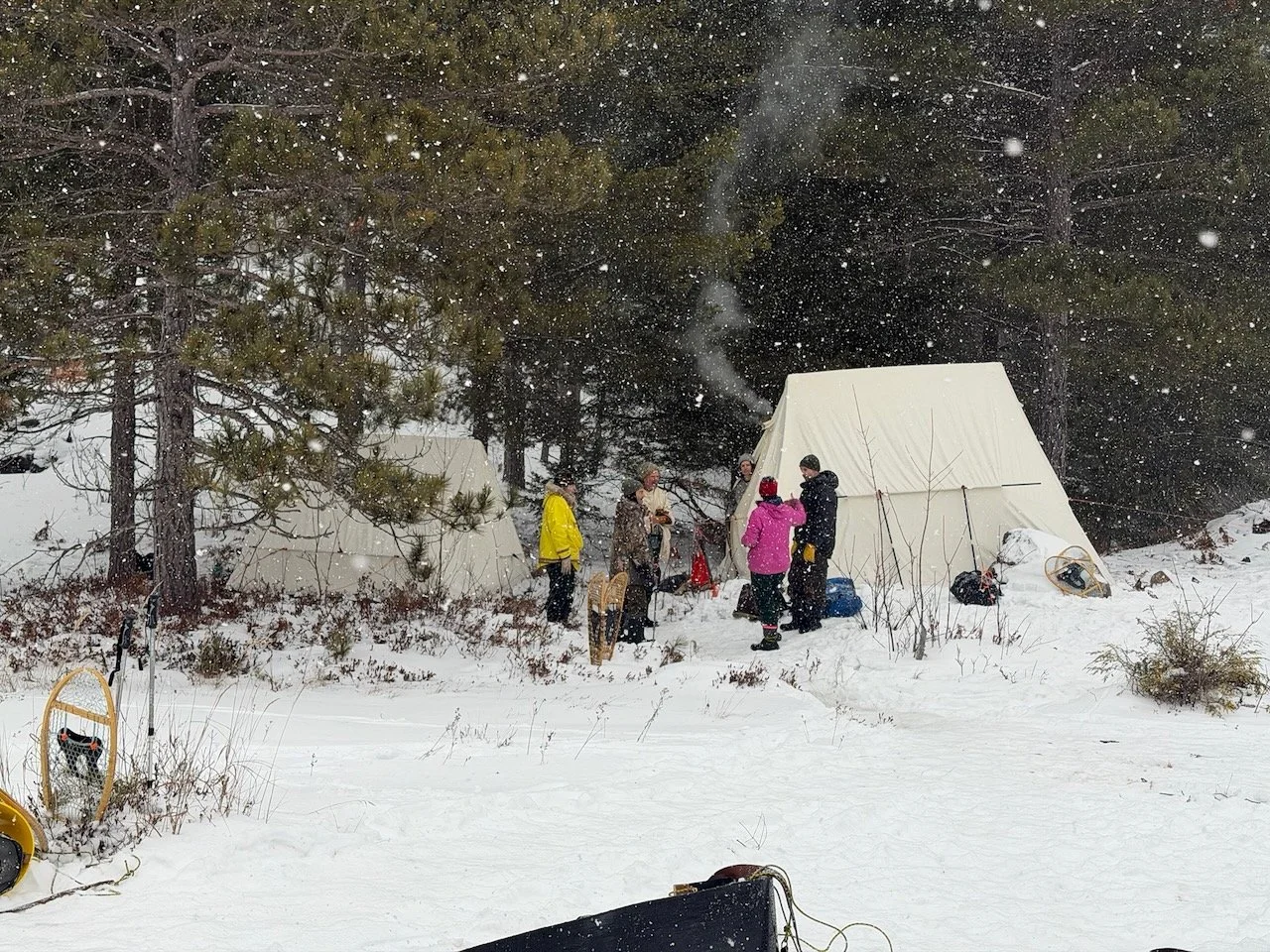
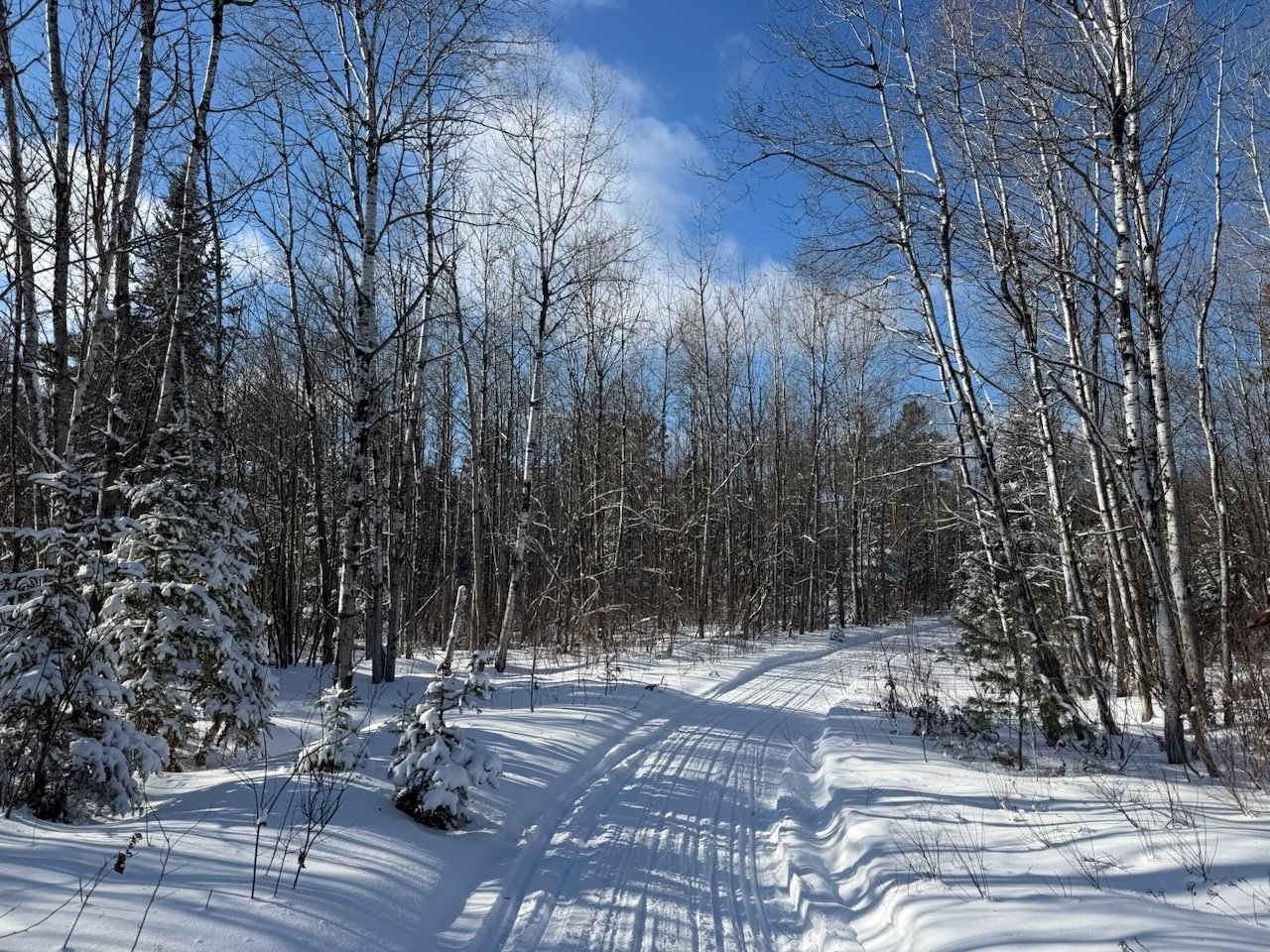
It snowed a lot the first couple of days. Like all the time. I loved it though, since it’s something I rarely experience.
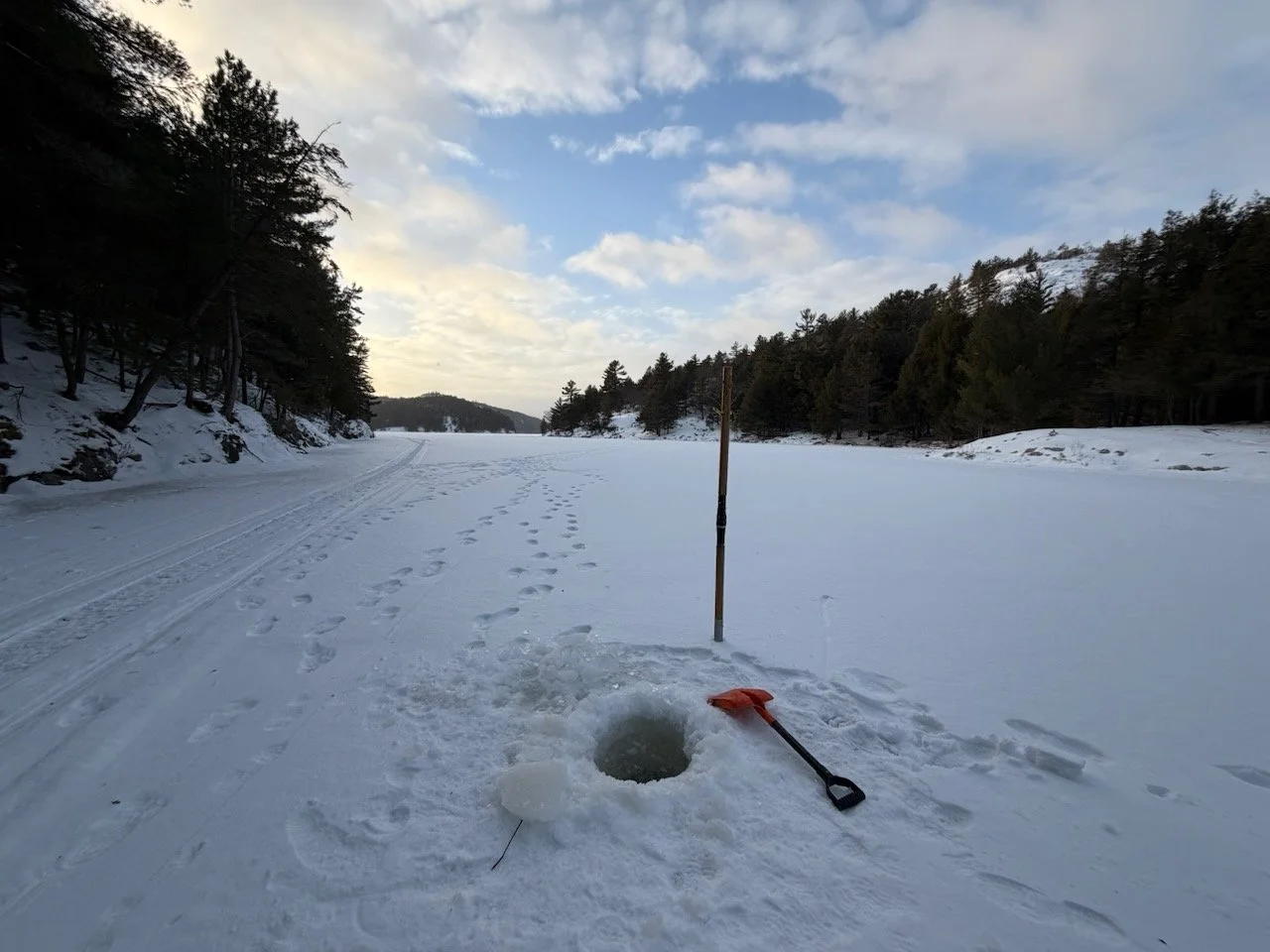
Every other day we’d snowshoe to a new camping spot. The first thing we’d do once getting to the site was set up the tents, followed by chopping wood and of course drilling a small hole in the ice for drinking water, or rather, ice water. We’d fill up a couple buckets and put them on the wood stove, and voila, a couple hours later, we had some nice tasting water to drink and cook with.
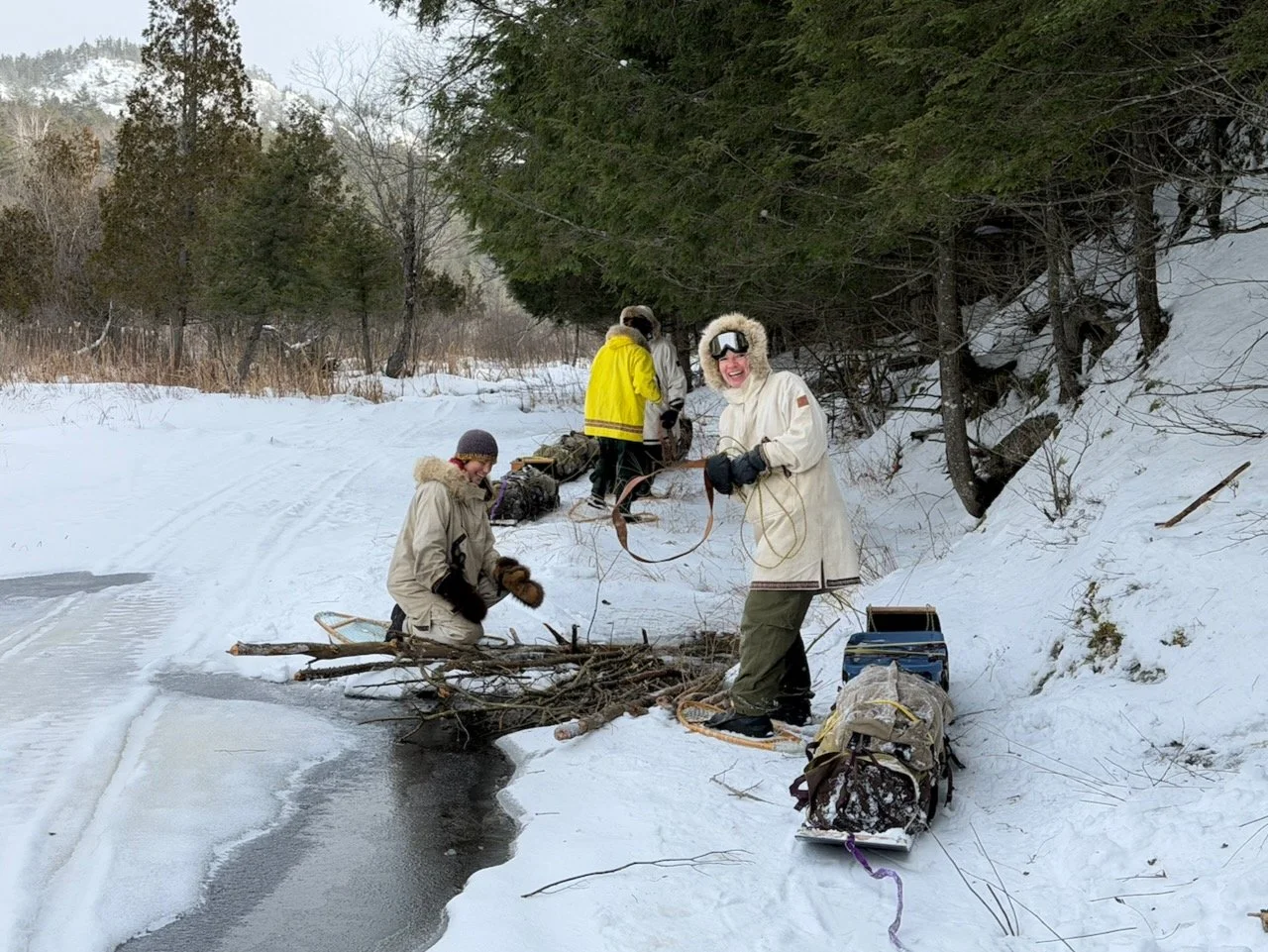
Crossing a shallow break in the ice, with a few branches carefully laid down, we were good to go. That’s Kie on the left and Katrina on the right.
Testing the ice.
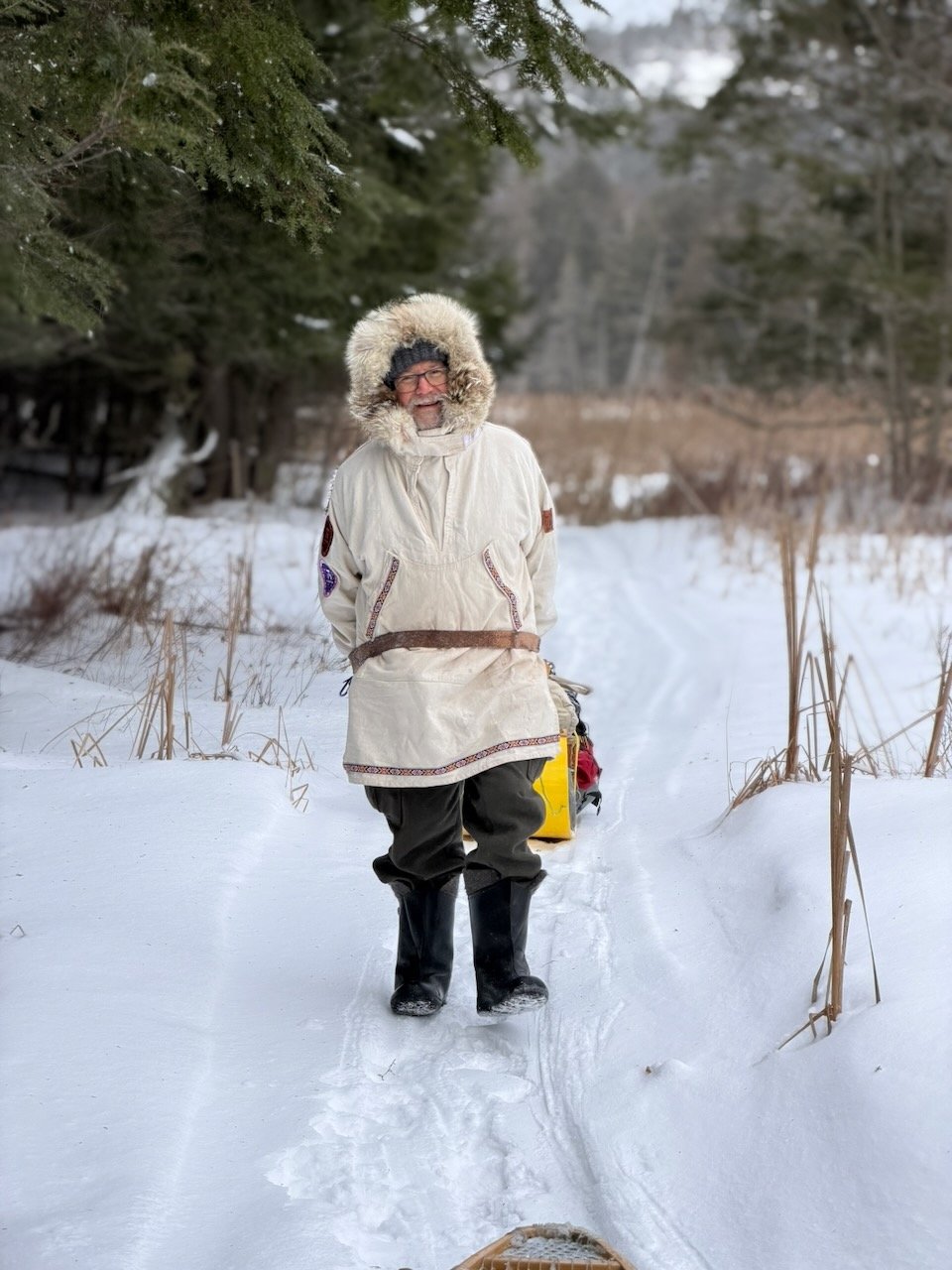
This is Brian, a retired teacher and our expert camp cook. Brian has been on a number of Lure trips and he keeps on coming back.
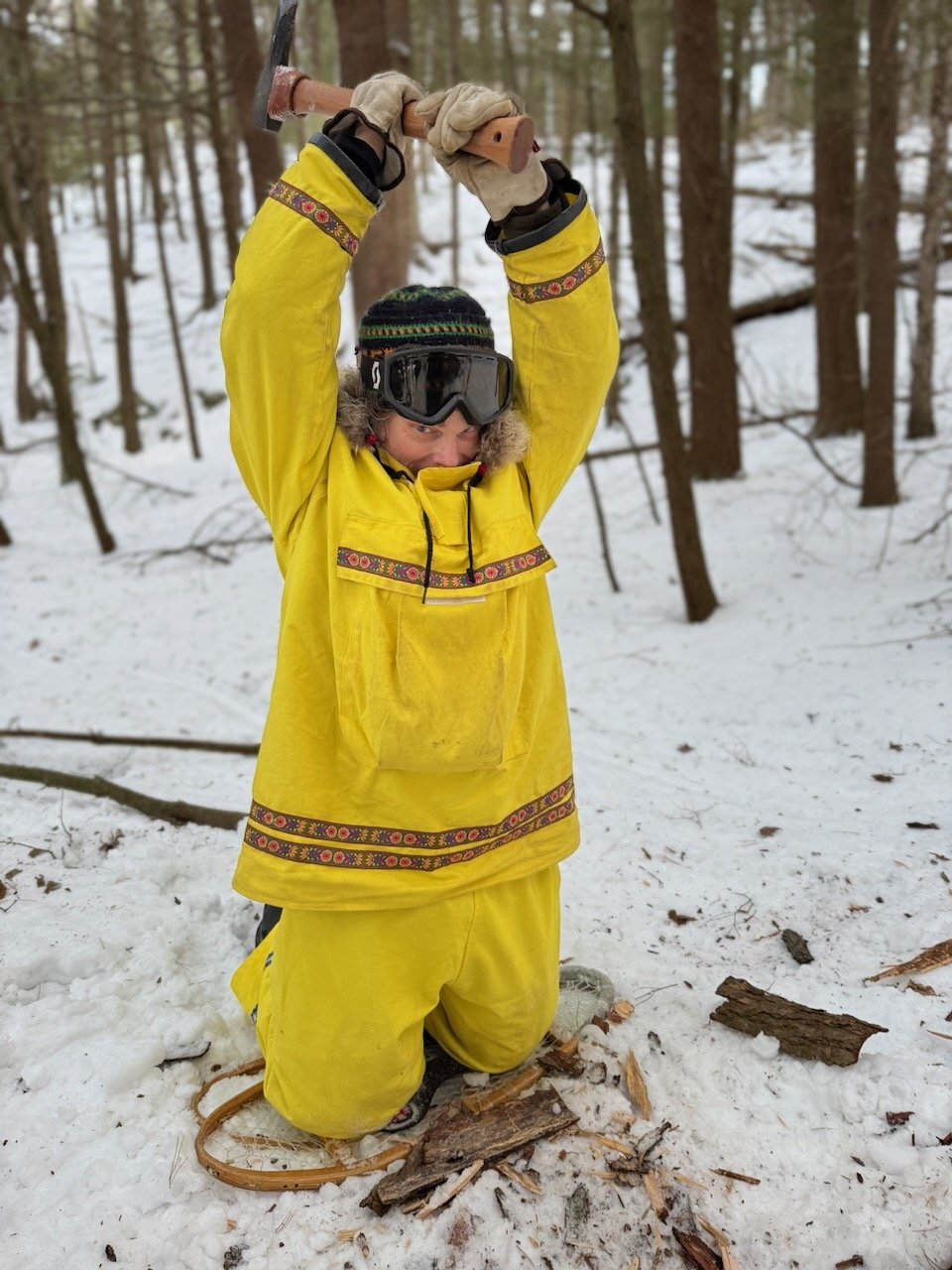
We chopped firewood every day for like an hour or two, and some folks like Daniel took it very seriously. Daniel is a retired marine biologist who lived in Norway among other places doing research. I learned he walks at least 10 kilometers a day, year round.
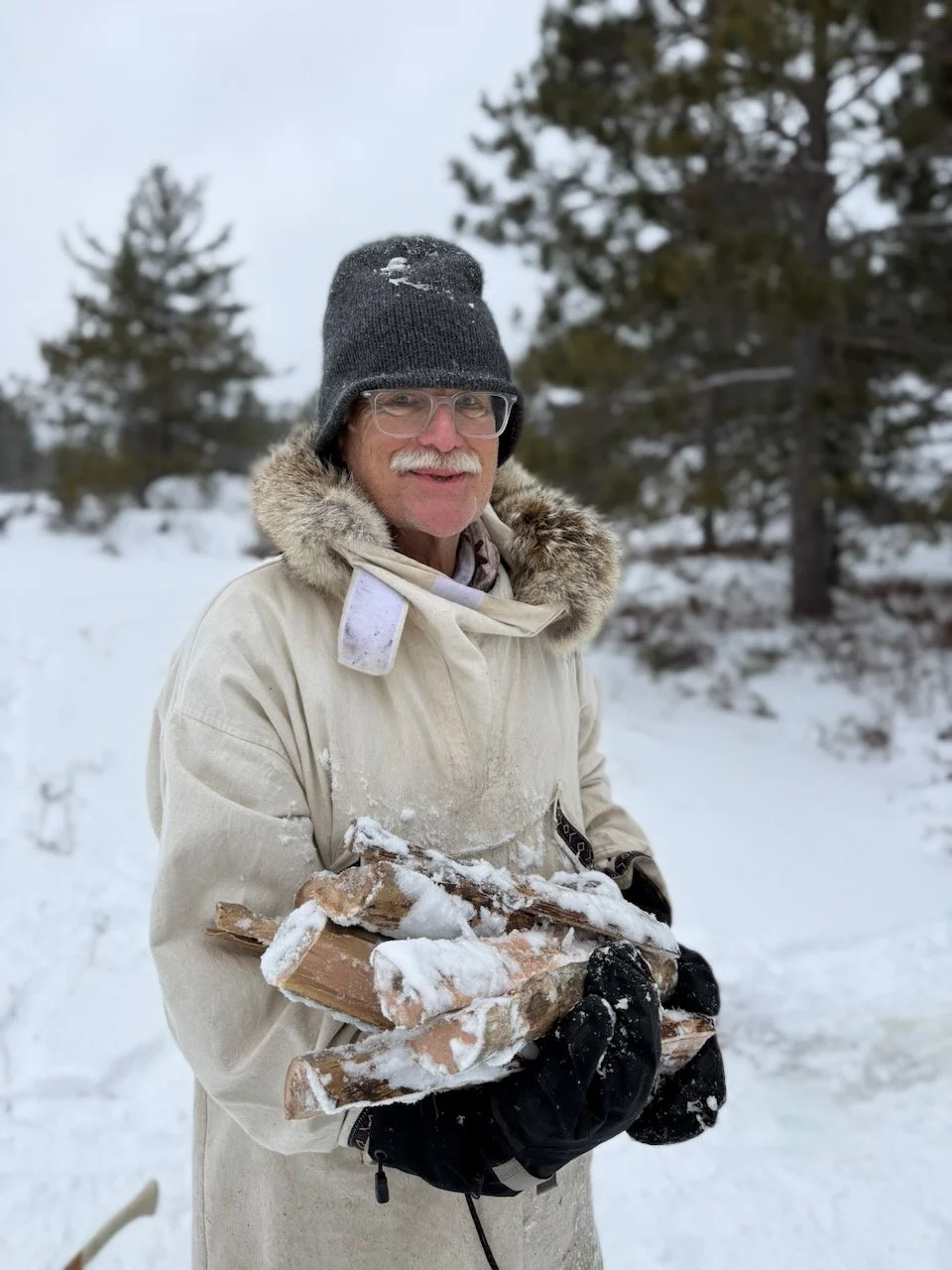
Meet Bill. An overall great guy from Maine, and repeat Lure participant. I learned a lot from Bill in our few days together about life and entrepreneurship, and wish we could have spent more time together. Bill has been to more countries than almost anyone I have met and interestingly worked for the Nature Conservancy for many years heading up their global real estate acquisition team.
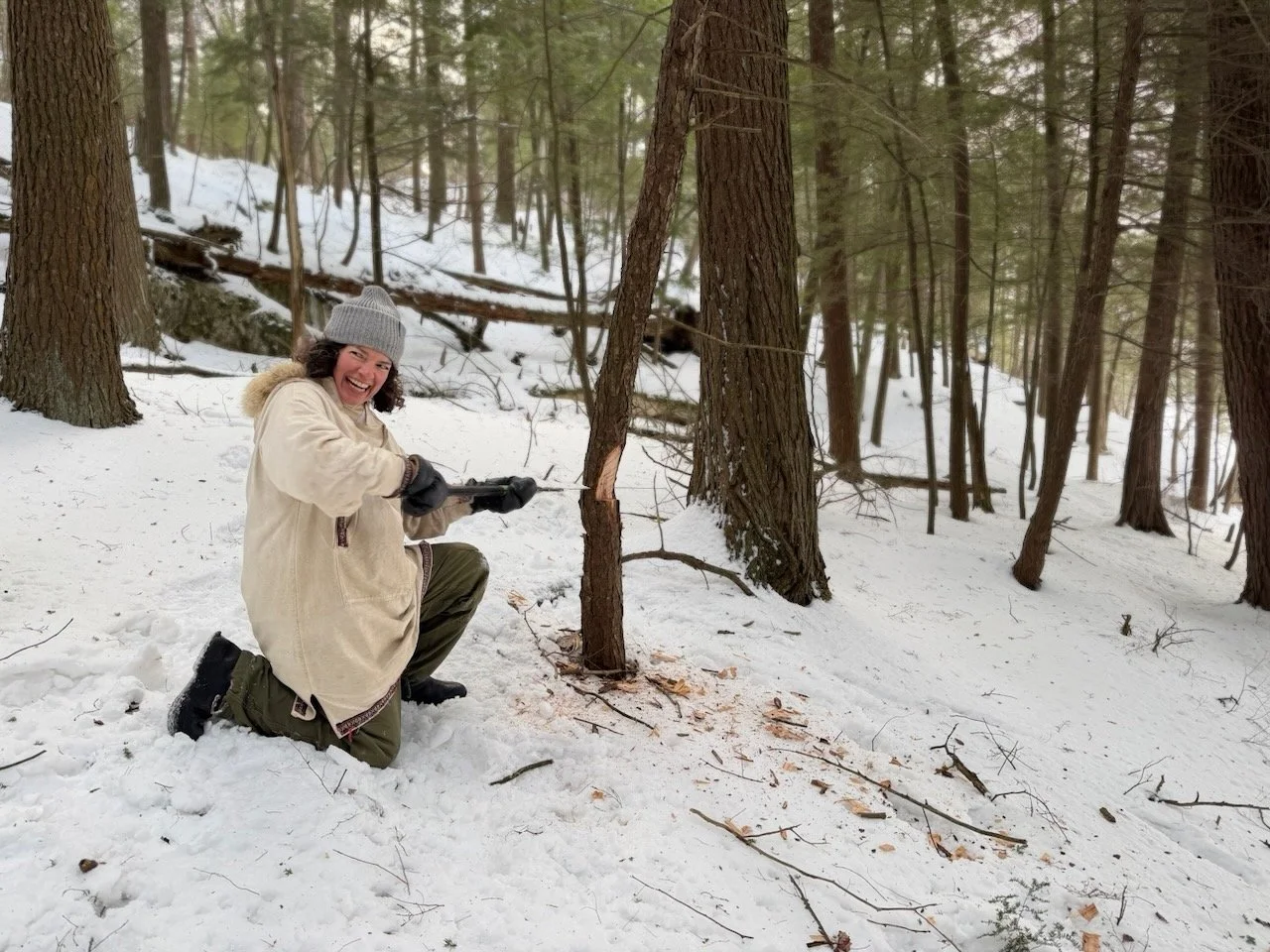
I enjoyed getting to know Katrina, a custom furniture maker who happened to know everything about the trees we were chopping down. Katrina, I look forward to hearing some good stories about your Newfoundland experience!
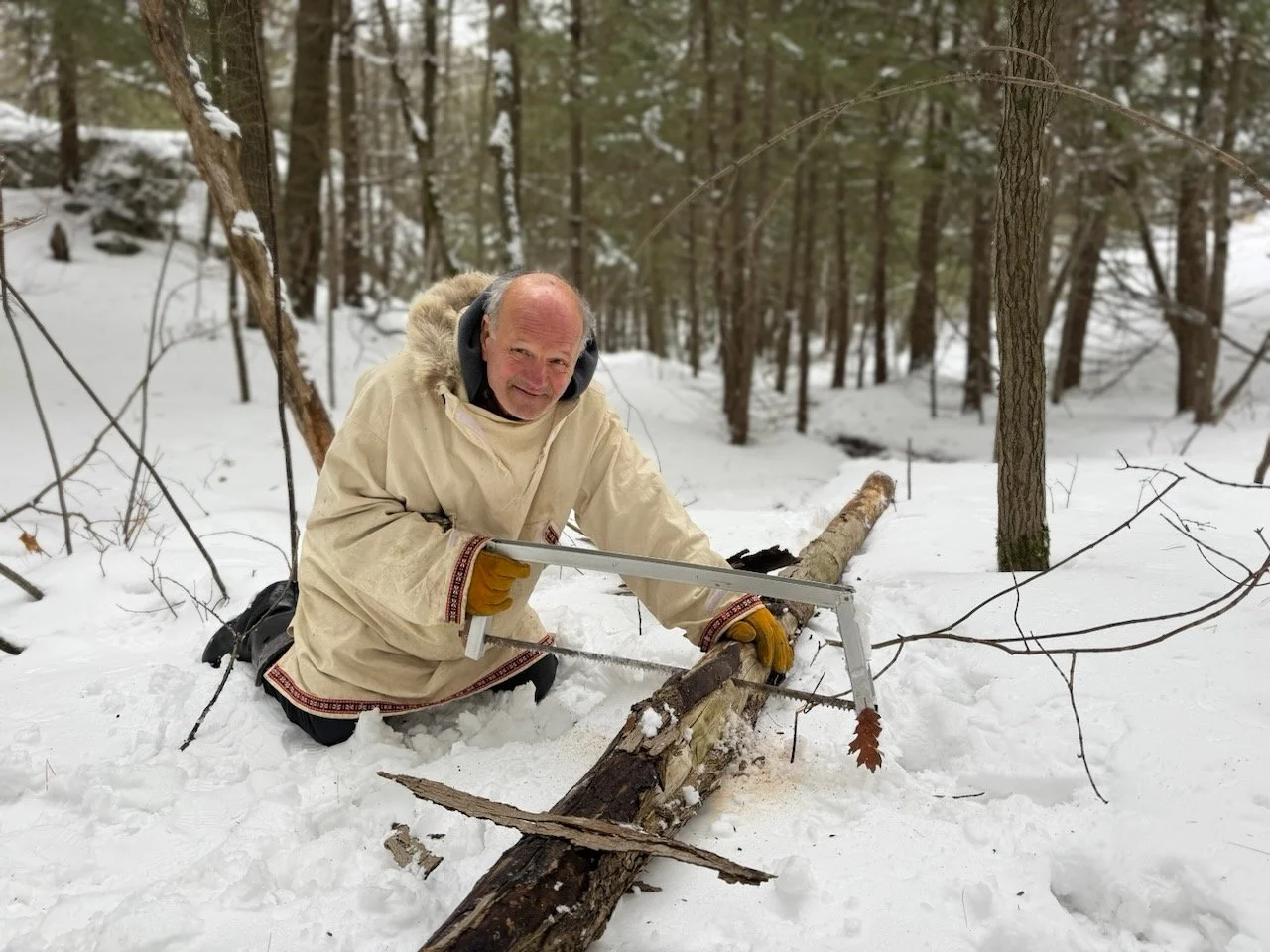
Here’s Jim, Kie’s dad. So fun that he could join the group on his first Lure of the North experience. He seemed to be an expert log chopper too and brought a calming presence to us all.
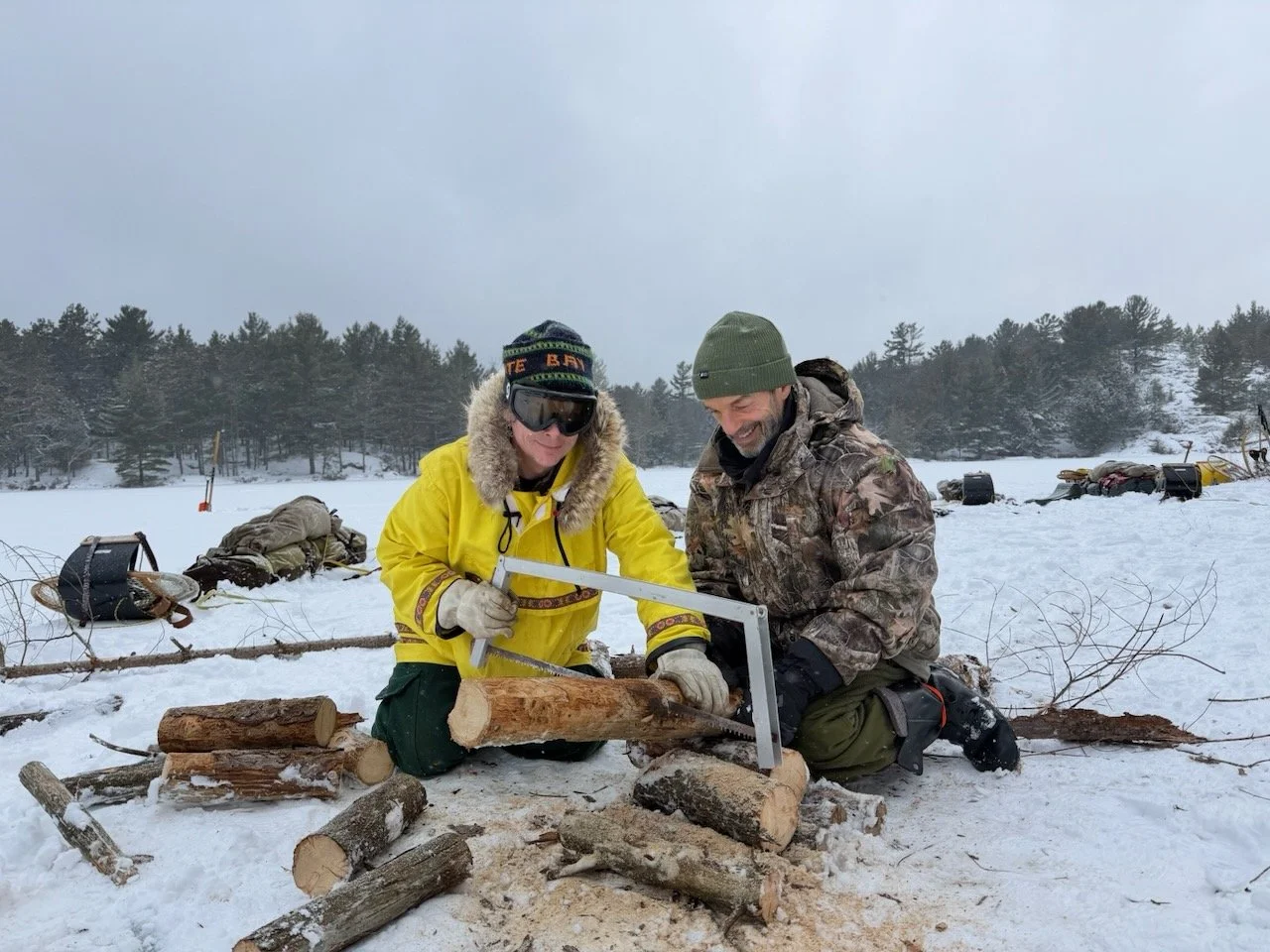
Renato, on the right, was my tent mate for the first two nights, and just an overall great guy. He’d tell me amazing stories about how he and his wife would go on five day paddling trips for vacation. How cool is that?! So inspiring. He is also an expert tracker.
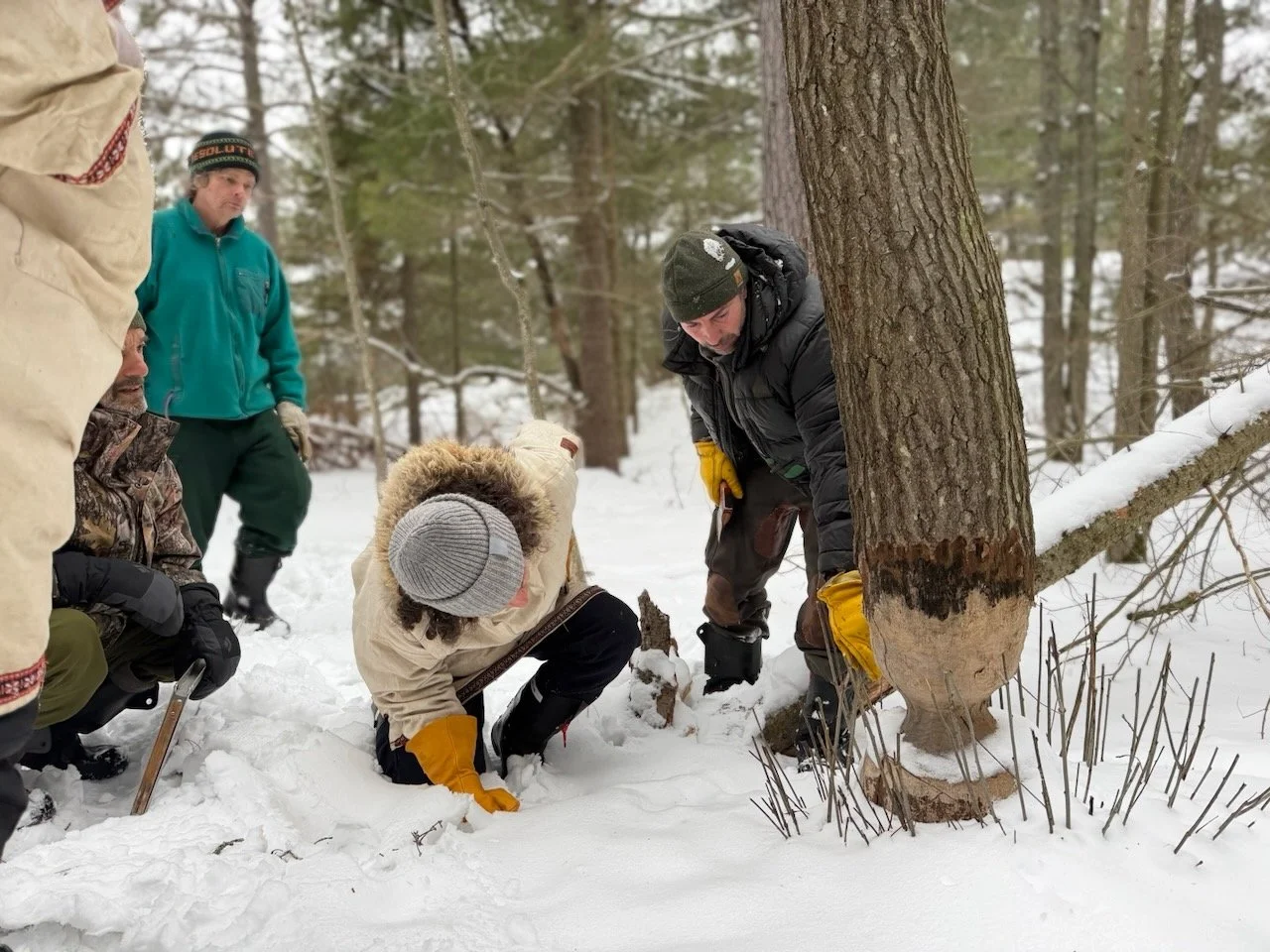
After setting up camp the first day, Dave taught us all about the different varieties of trees, hardwood vs softer woods, and how you can tell if a tree was alive or dead, since you’re only supposed to cut down dead trees. This funny looking tree had its base eaten by a beaver. Beavers area all over the place here and we saw a couple beaver lodges while on the ice. I learned that beavers eat 100% wood for their diets! They must have a pretty strong digestive system. So the beavers will create dams to flood an area and then when they chop down bigger trees, the trees will float and they can move them around to build their lodge where they reside.
Dave and Kie manage what is called a trapline, which is a square area following the waterways (in the past they ran a trip called Life on the Trapline). In order to maintain/keep your trapline license, you need to catch a minimum of 30 beavers but no more than 40. There are maximums though for catching any fur bearers (muskrat, river otter, mink, wolverine). Interestingly, the wholesale value of a beaver pelt is about $20, so it’s more about the hunting experience and trapping to control the beaver population.
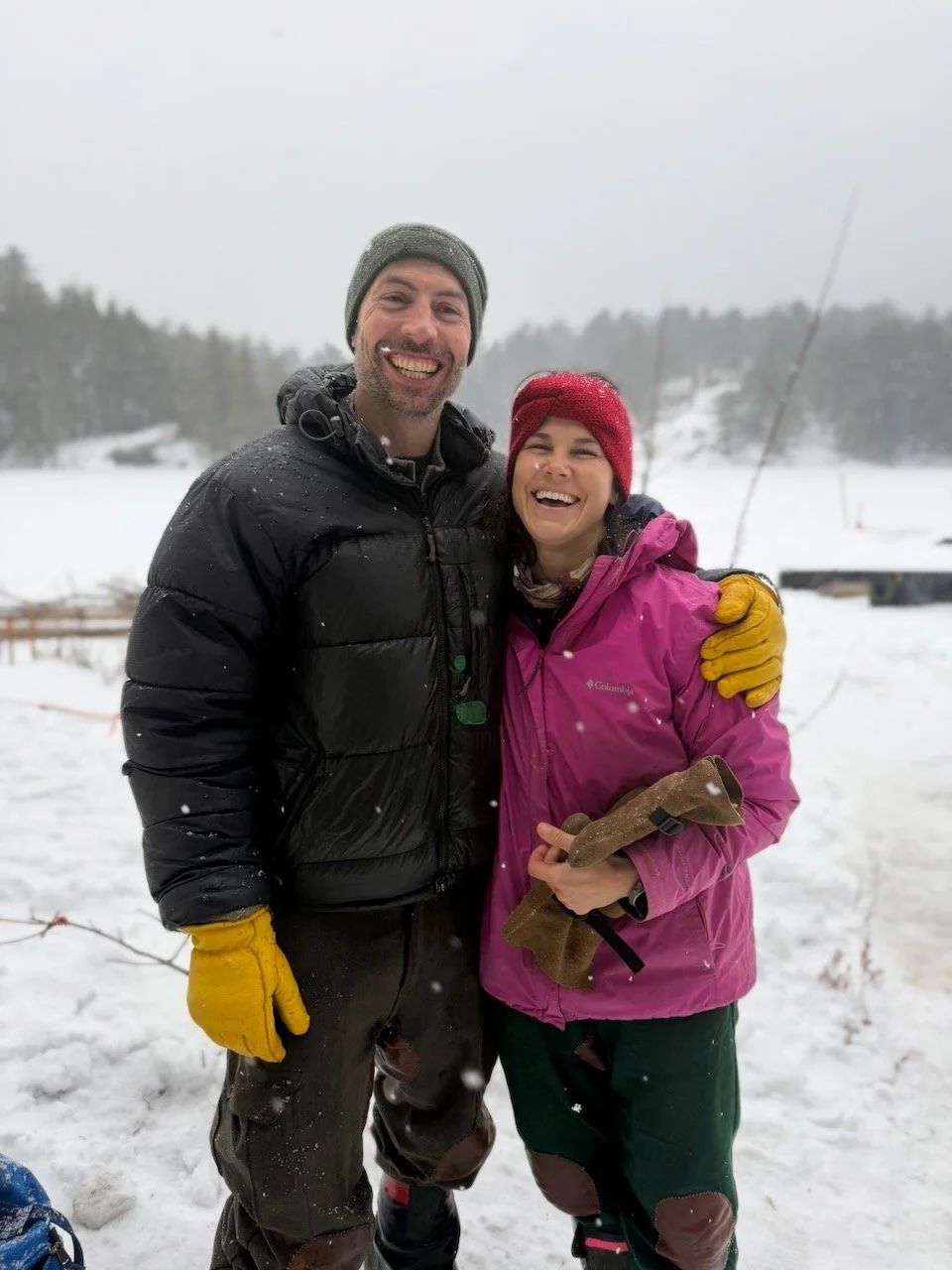
Here’s Dave and Kie. They met in college, and in their mid 20s launched Lure of the North. They are two of the kindest people you could meet, and also two of the strongest. Living off grid in a harsh environment takes a serious level of commitment. Their deep love for their land was infectious. Much respect to them for the lifestyle and business they have built.
I hope that our paths cross again.
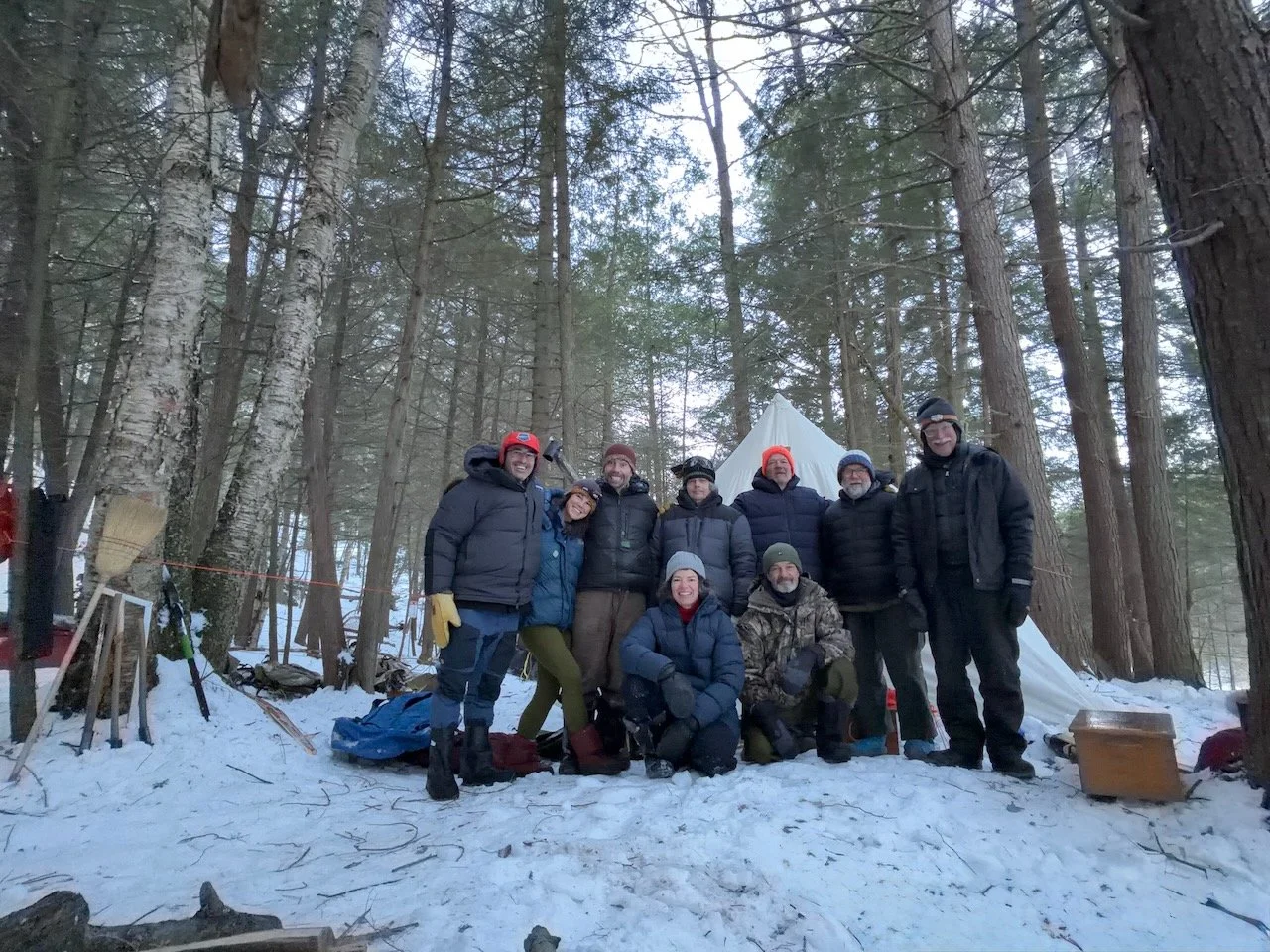
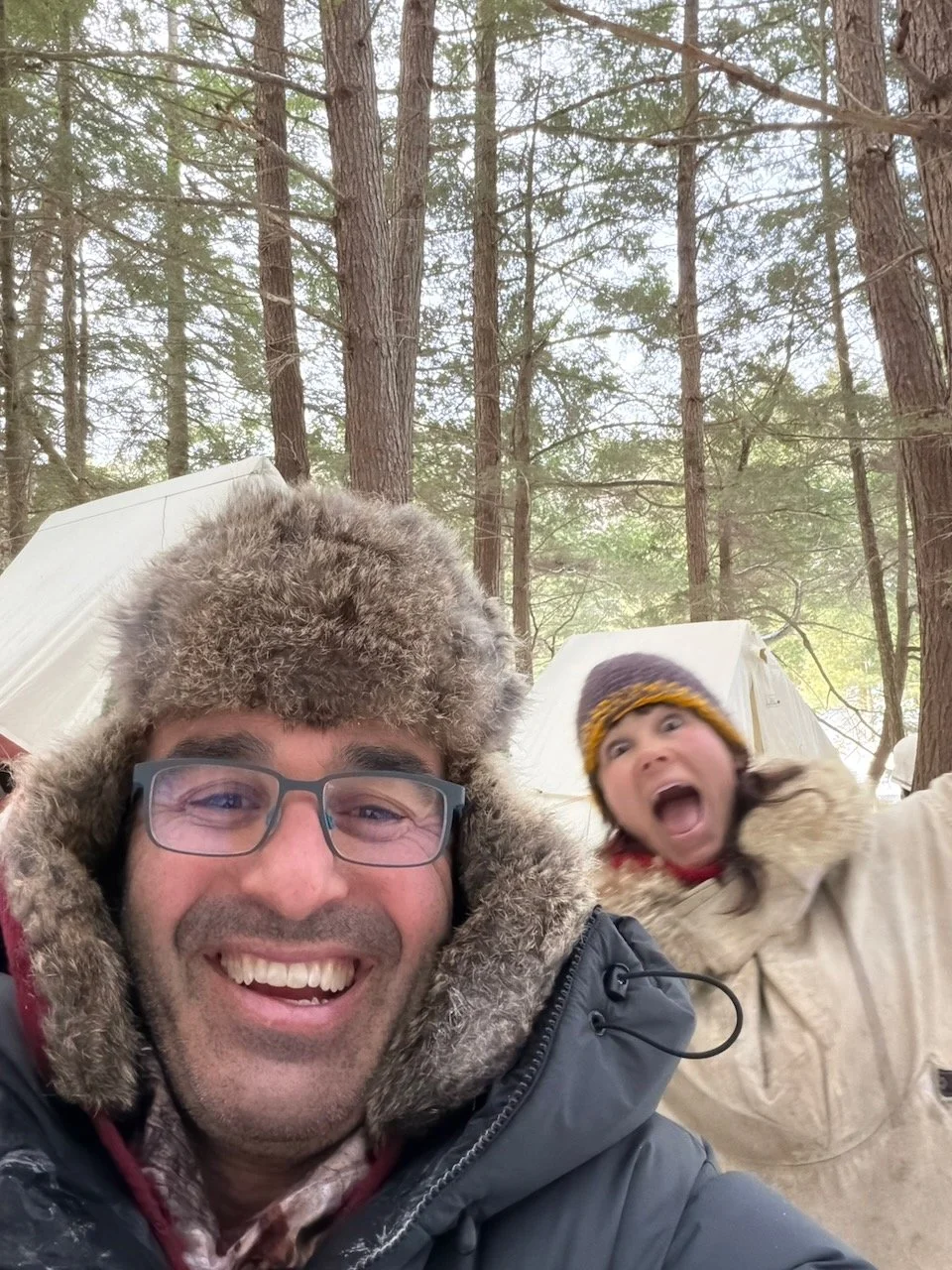
My last morning with the group. Below, a couple photobombs from Kie.
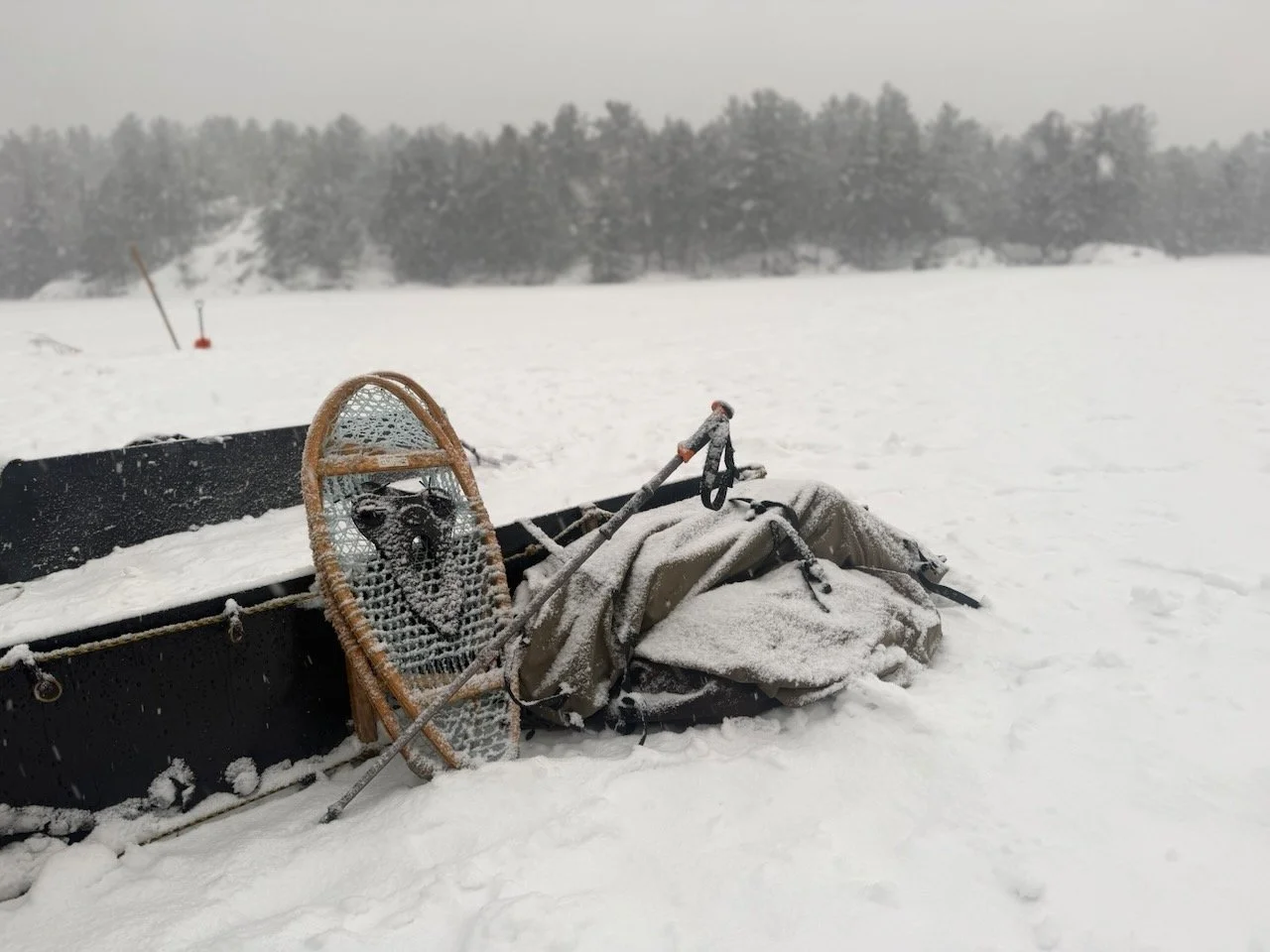
Toboggan after a little dusting.