French Polynesia
Two years ago we had the pleasure of joining our close friends on a sailing adventure in Greece. This time we chose to explore French Polynesia. And it did not disappoint. Prior to the trip I had limited knowledge about the area most are familiar with as Tahiti. But Tahiti is actually just the main island with the international airport, and a collection of smaller islands around it.
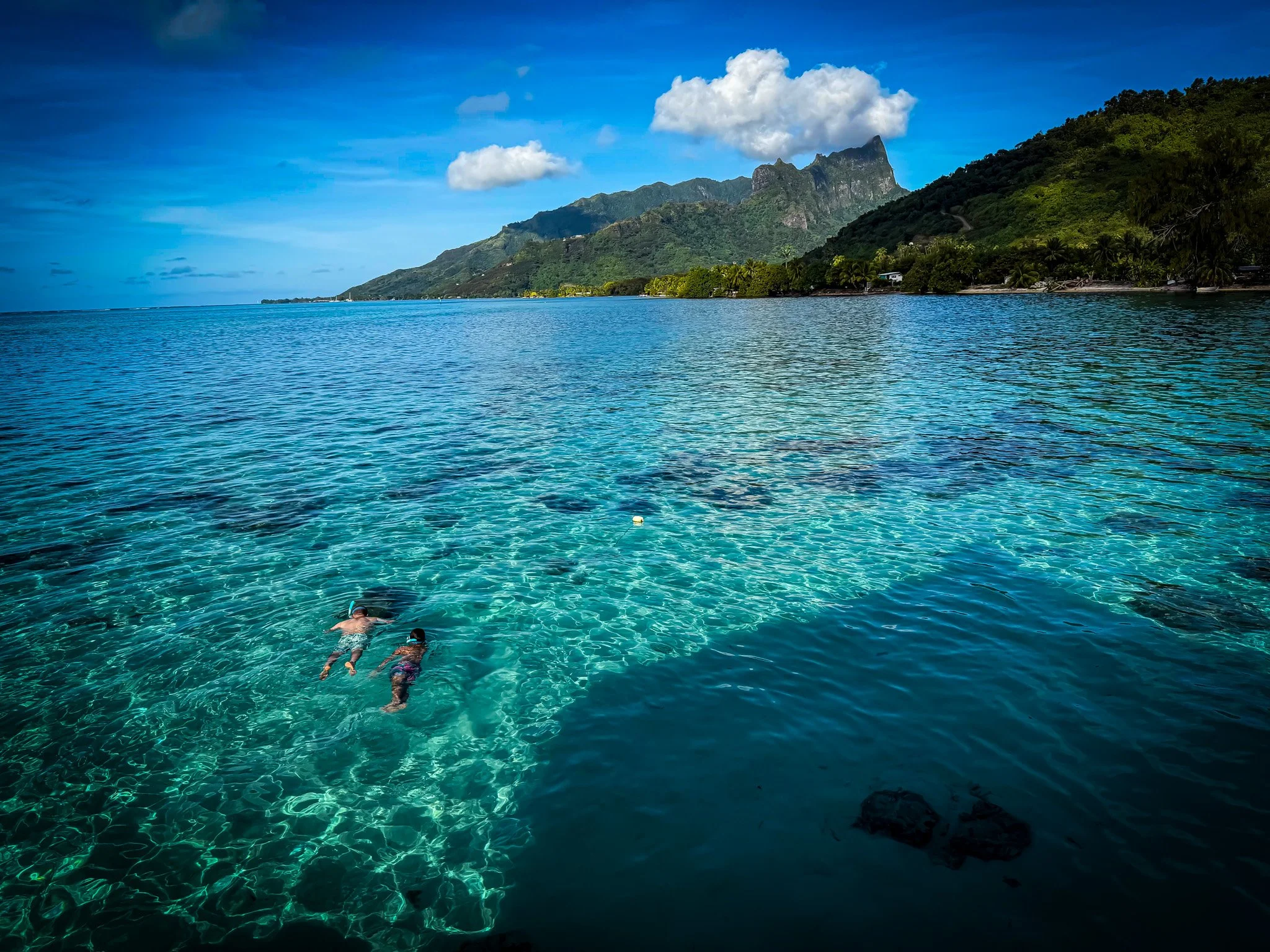
Moorea is the third largest island in French Polynesia, and it’s about a 15 minute ferry ride from Tahiti. We spent our first two nights at a nice resort there. Here we are snorkeling at the resort.
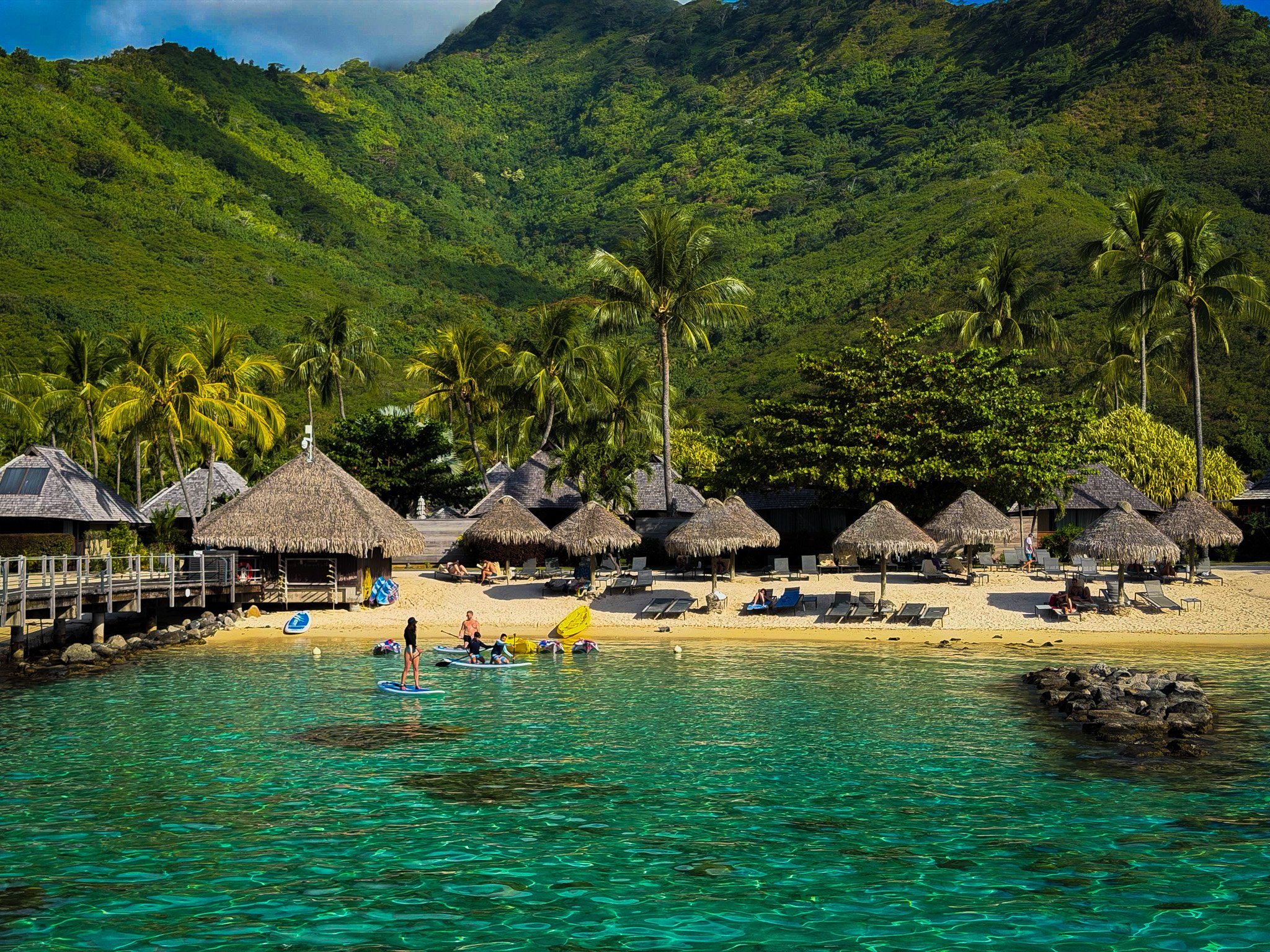
One thing that distinguishes French Polynesia from other tropical island destinations are the incredible old volcanoes that shape the reefs around each island, and add a sense of majesty and depth that contrasts with the clear water below. This is different than other destinations like the Seychelles or Hawaii for the most part.
After we picked up our catamaran in Moorea, we sailed a brief time to the island of Taha’a where we spent the night. Once we turned on the outside lights, within a few minutes a few reef sharks came over to say hello.
The next day, we toured a pearl farm and learned about how Tahitian pearls are made, which was quite interesting.
We soon departed and sailed to the iconic island of Bora Bora, pictured below. Bora Bora is one of the most well known islands around the world, and after visiting it was clear why. The island itself is an old volcano rimmed by gorgeous beaches all the way around. Around the island is a mostly shallow lagoon rich in marine life. On the perimeter of the lagoon are a series of motus, which are small narrow islands. The motus completely encircle Bora Bora except for one natural opening wide enough for boats to pass through, perhaps a little wider than the mouth of the San Francisco Bay where the Golden Gate Bridge is. The opening was widened in 1942 when the Americans arrived for defense from the Japanese in World War II, in Operation Bobcat. They left at the end of the war.
Encircling the motus is a barrier reef. This is important as it breaks the waves and is helpful during storms. On the motus are where many of the resorts are, like the Four Seasons Bora Bora. There’s also a small airport with a few flights a day to Tahiti.
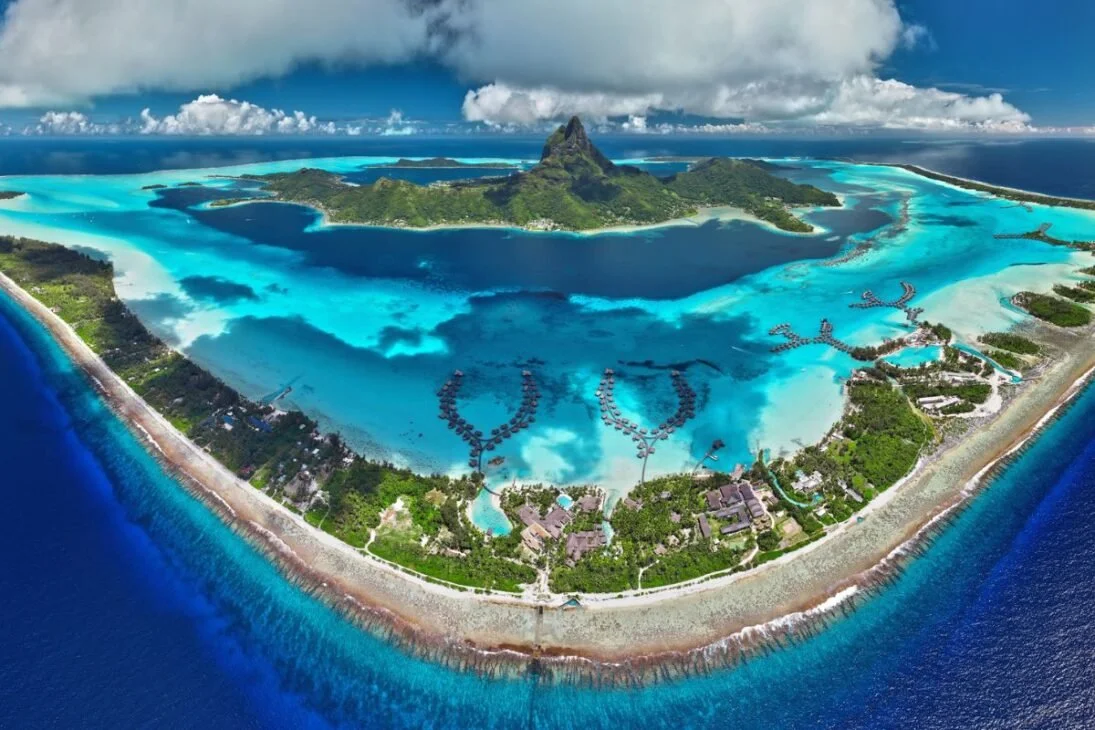
I searched the web for a beautiful photo to capture the essence of Bora Bora from the air and I felt this one came close to doing it justice. I’d love to give credit to the talented photographer who took this photo but could not find any info to credit them.
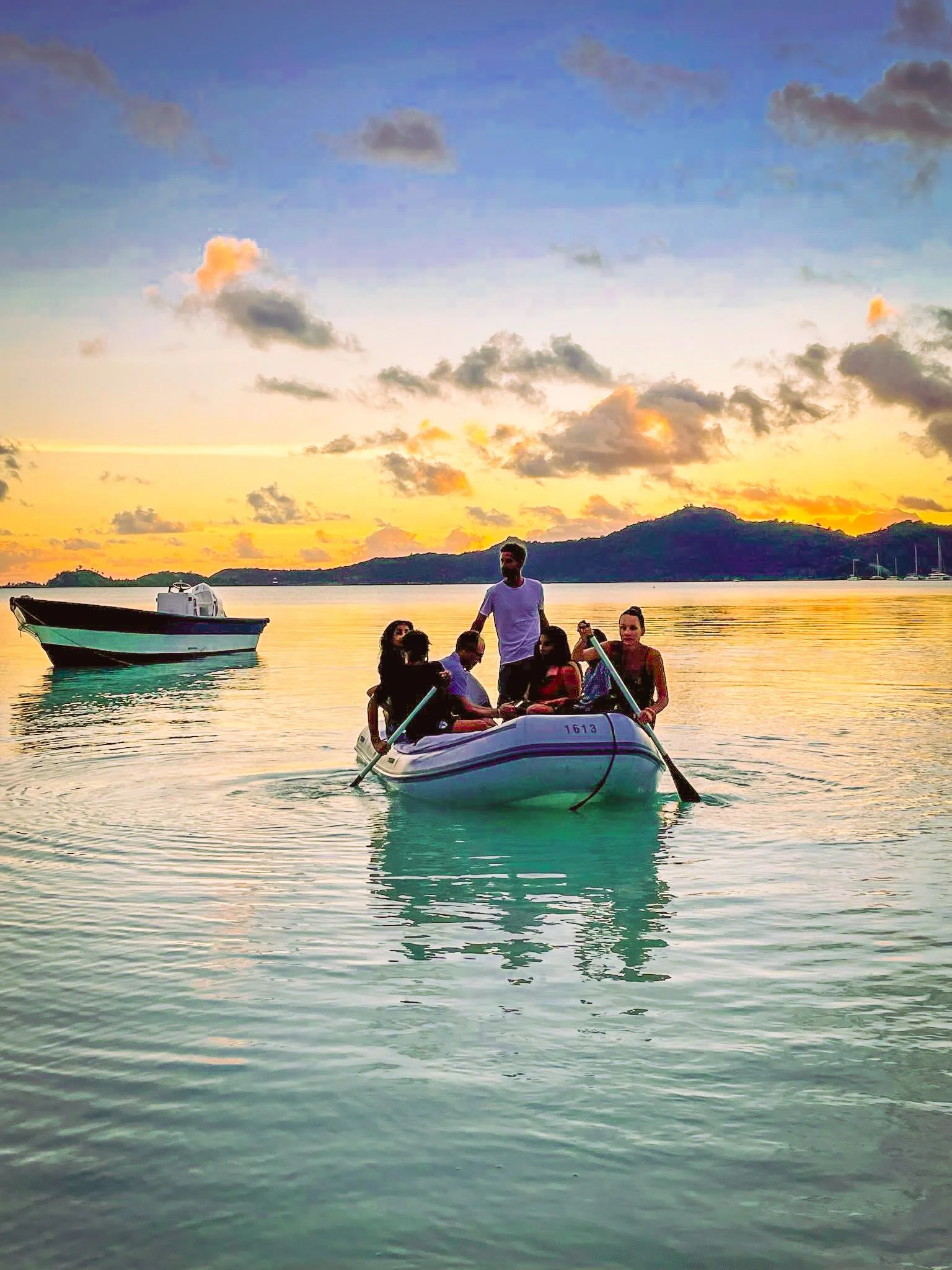
In Bora Bora, there are only eight spots in the lagoon where you can moor on a buoy from the night. So we’d usually be within a few hundred feet of the shore. For dinner most nights we’d take our dingy on a little excursion to a restaurant on the beach where we’d watch the sunset and enjoy a bite to eat. The water was often so shallow you could be a hundred feet from the shore and the water would be only a few feet deep.
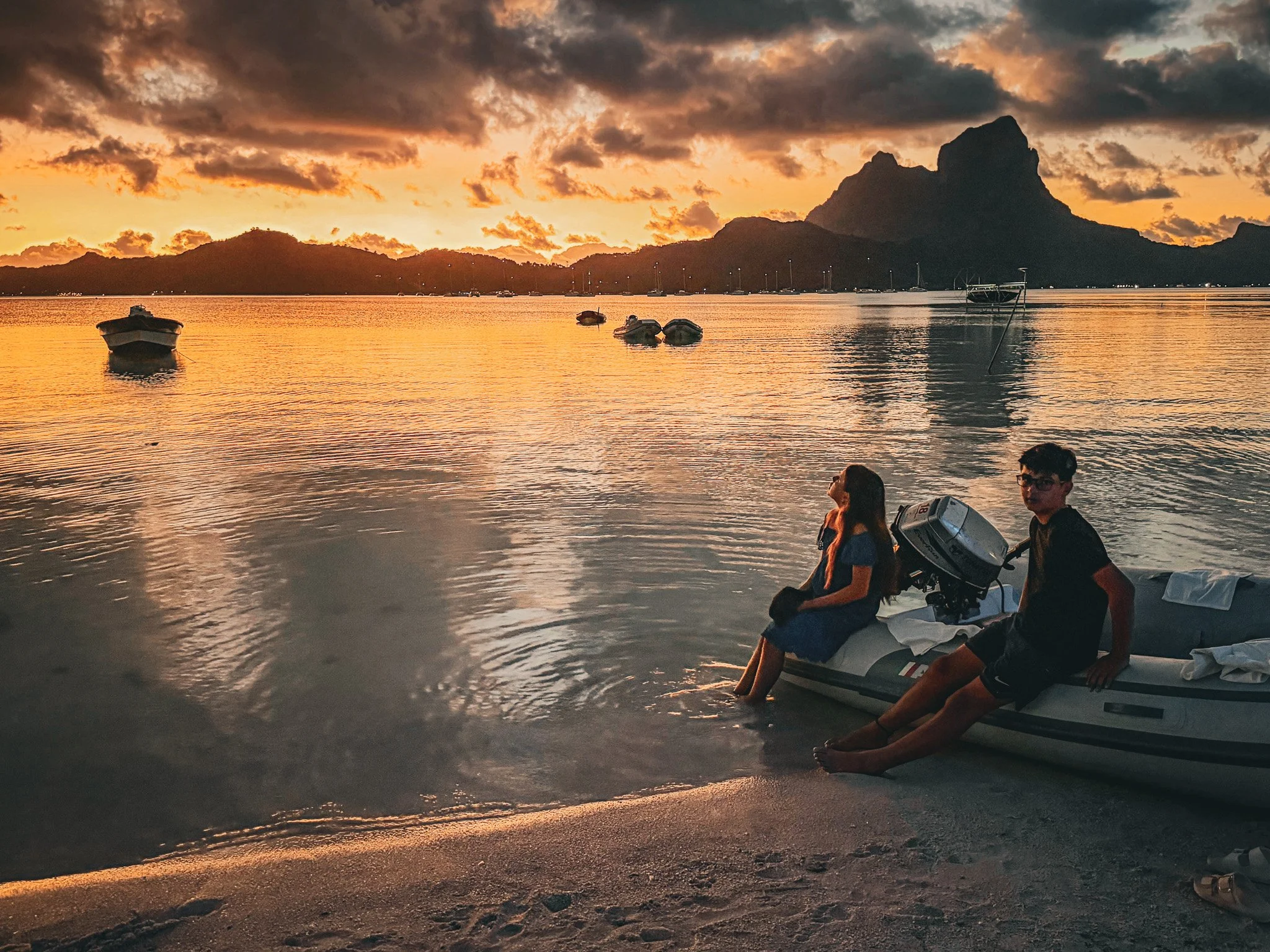
Bora Bora sunset.
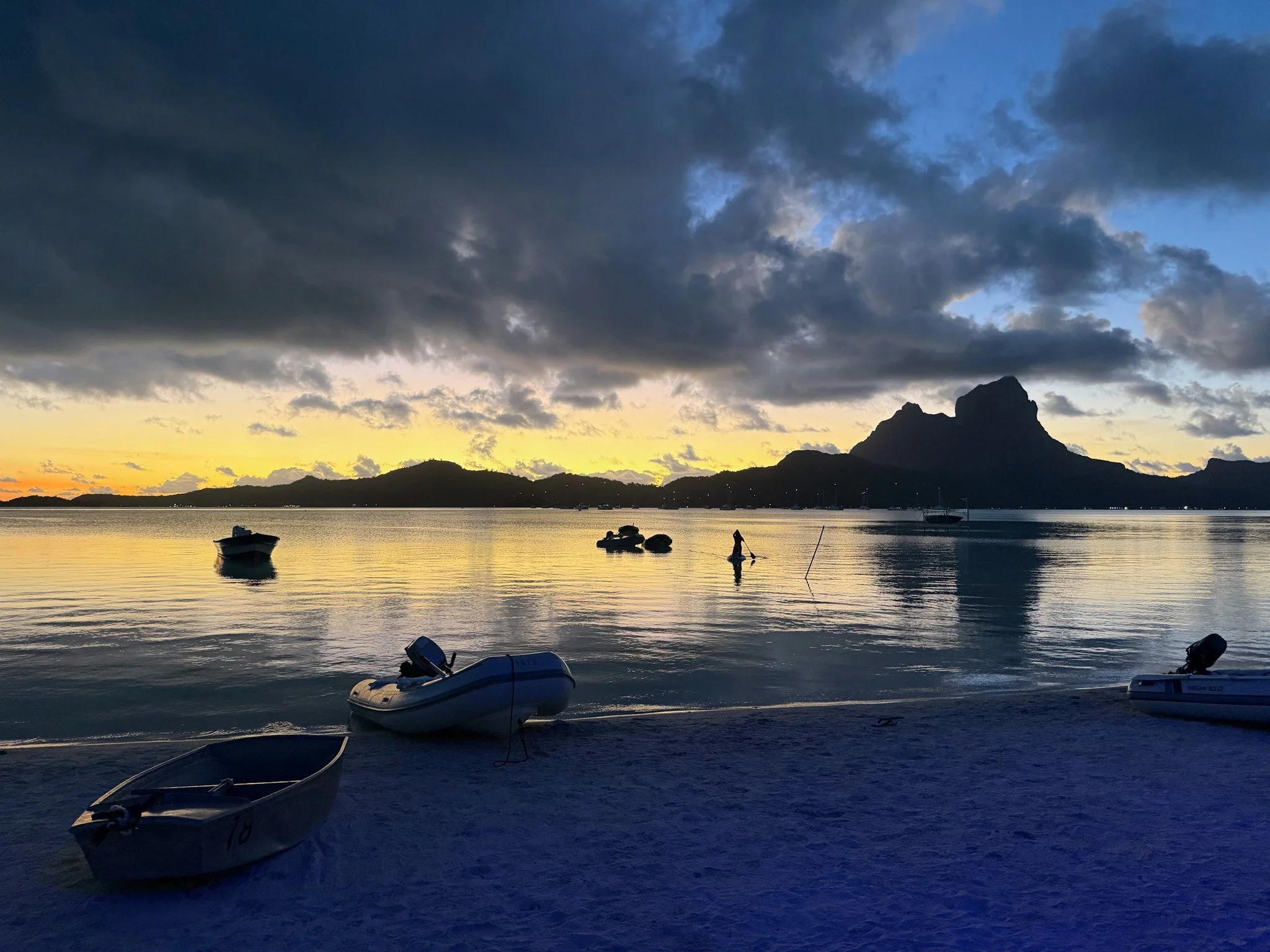
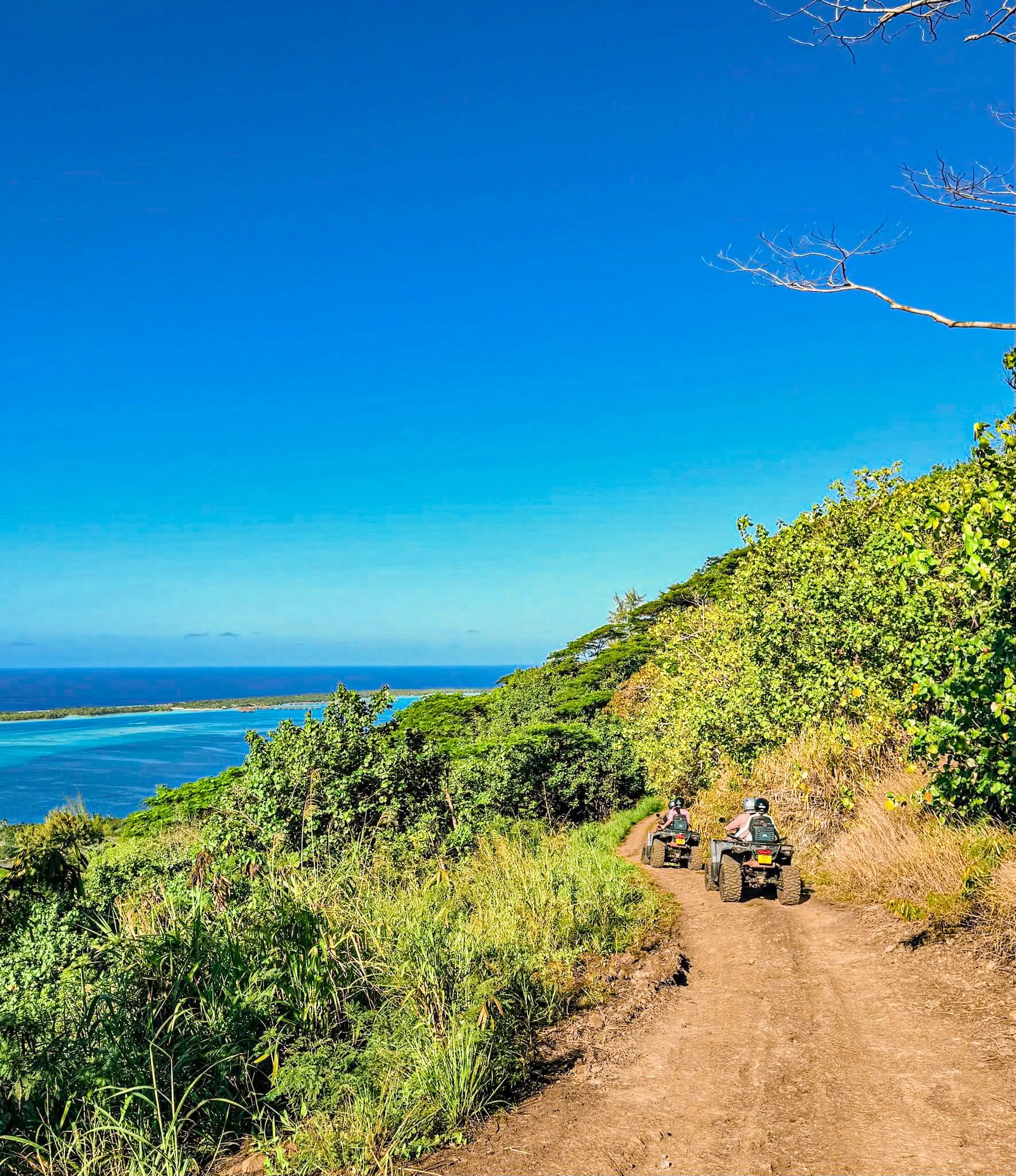
One day we did an ATV tour of Bora Bora. This was our first time doing this as a family and it was a memorable experience.
During our tour with a local guide we learned a little bit more about what it is like living on a small island of about 10,000 full time residents. Naturally the island is entirely dependent on tourism. The cost of desalinated fresh water for one family’s small home here is about $450 to $500 every three months. Many families will collect rainwater and use it for their garden, for showers, and washing dishes, and use the desalinated water for drinking. There is one diesel power plant that supplies most of the island with power. The resorts on the motus create their own power with generators and solar. Most trash is sorted on the island and then removed. All goods arrive on about five cargo boats per week from Tahiti, and then all local businesses, including the resorts, will pick up their orders at the pier.
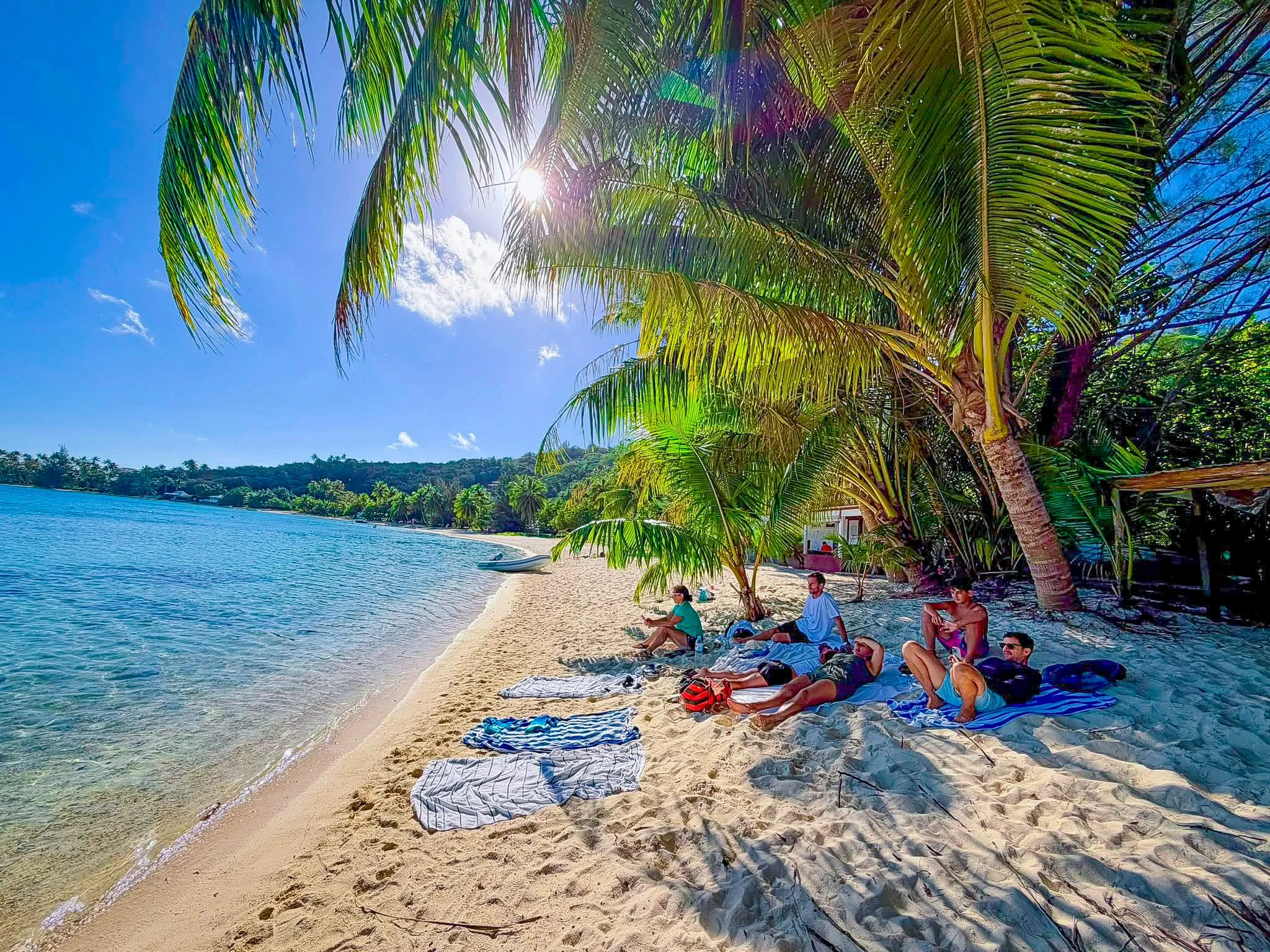
A relaxing afternoon at a local beach. Compared to Hawaii or the Mediteranean it felt like there were so few people here. And then we looked online and learned that each year, Hawaii has about 8 to 10 million visitors. French Polynesia has about 250,000 visitors a year and that’s it. Many visitors are French, naturally, and it’s about a 24 hour journey for them, including a two hour stopover in Los Angeles.
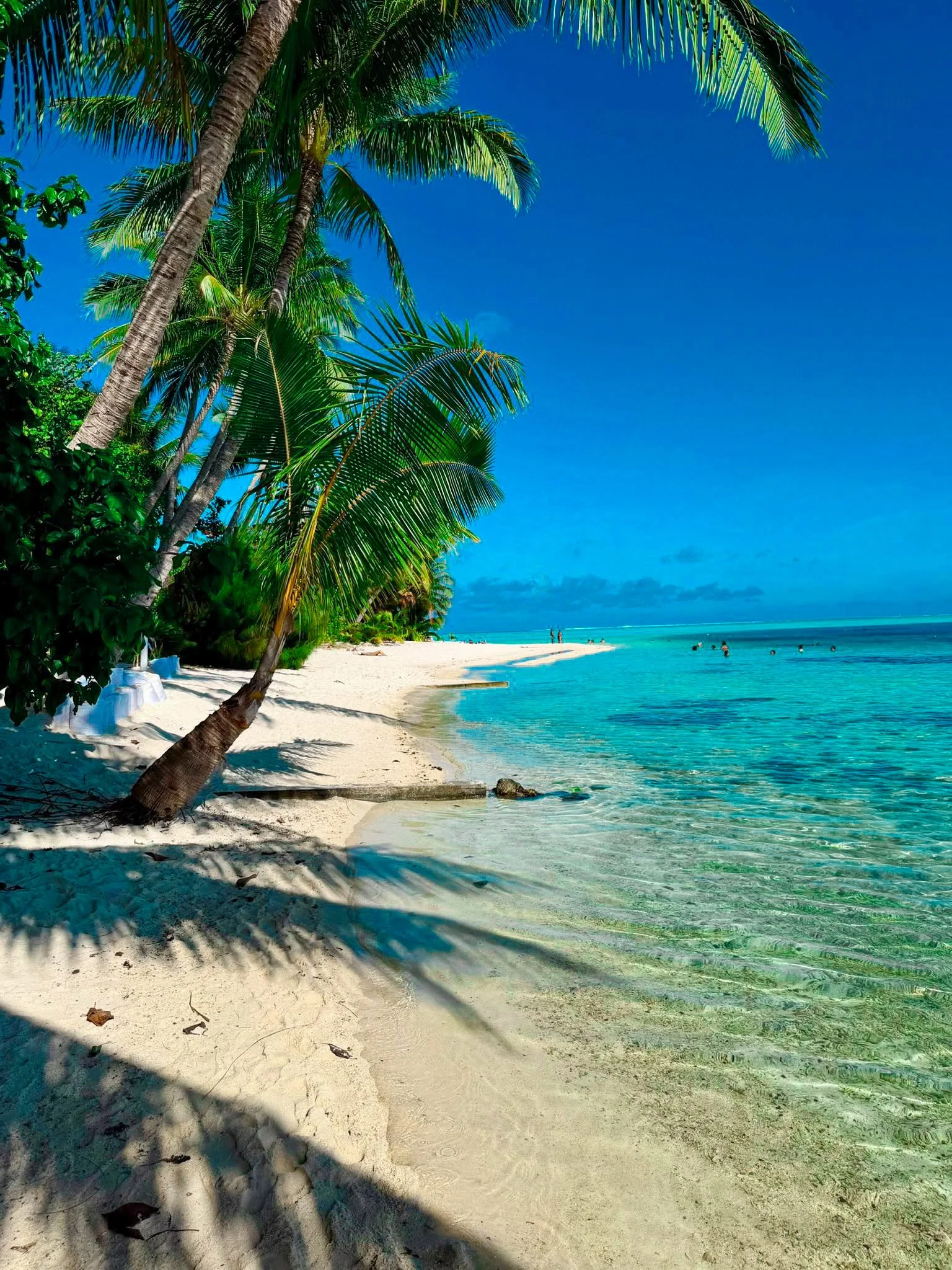
There’s about 300 islands in French Polynesia and while there’s a few main ones most tourists visit - Tahiti, Moorea, Raiatea, and Bora Bora - there’s about 30 islands that attract visitors, though the balance are more remote and sometimes only have 1-2 flights a week, and one boat resupply visit a month. These areas are truly remote.
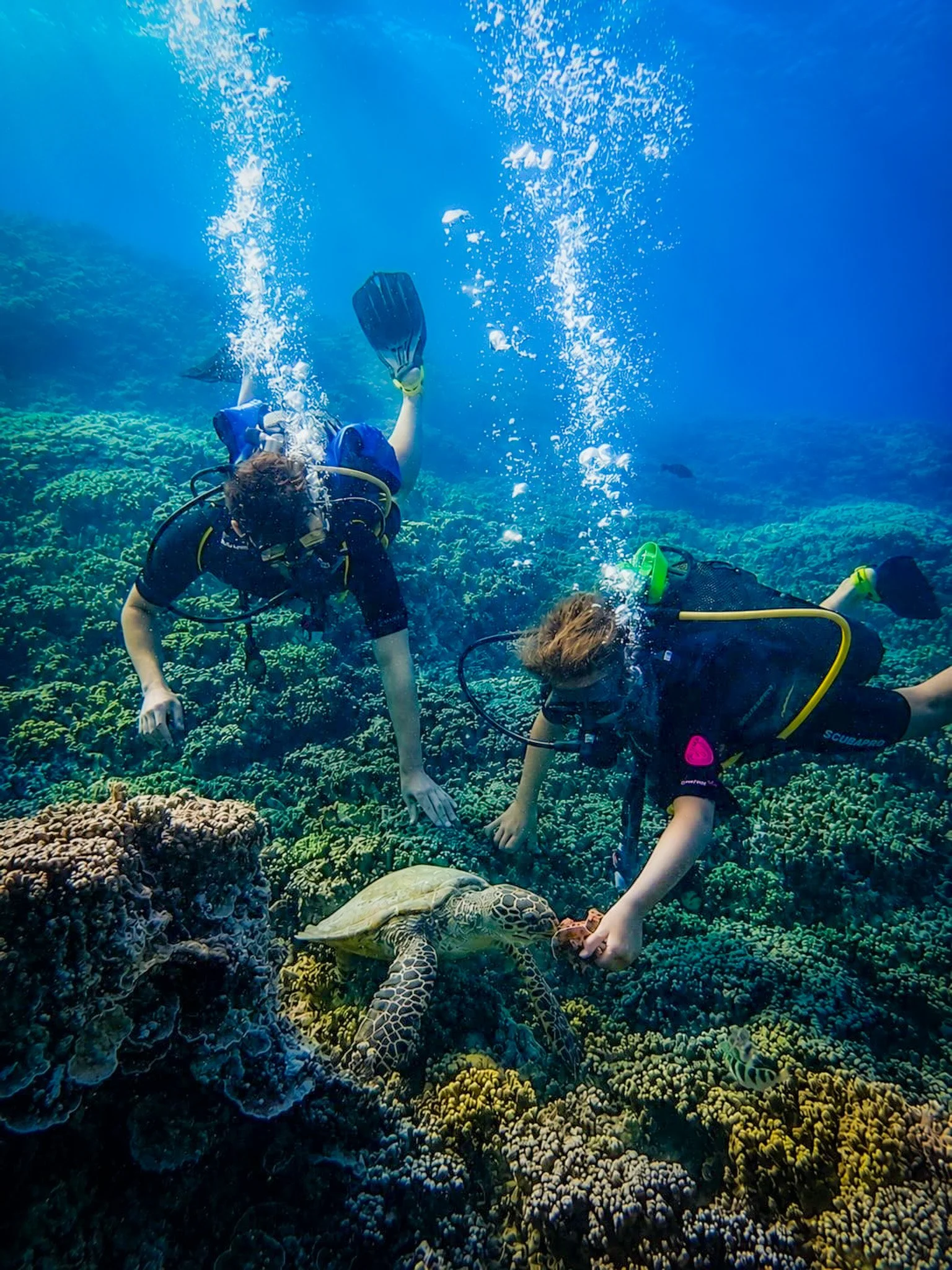
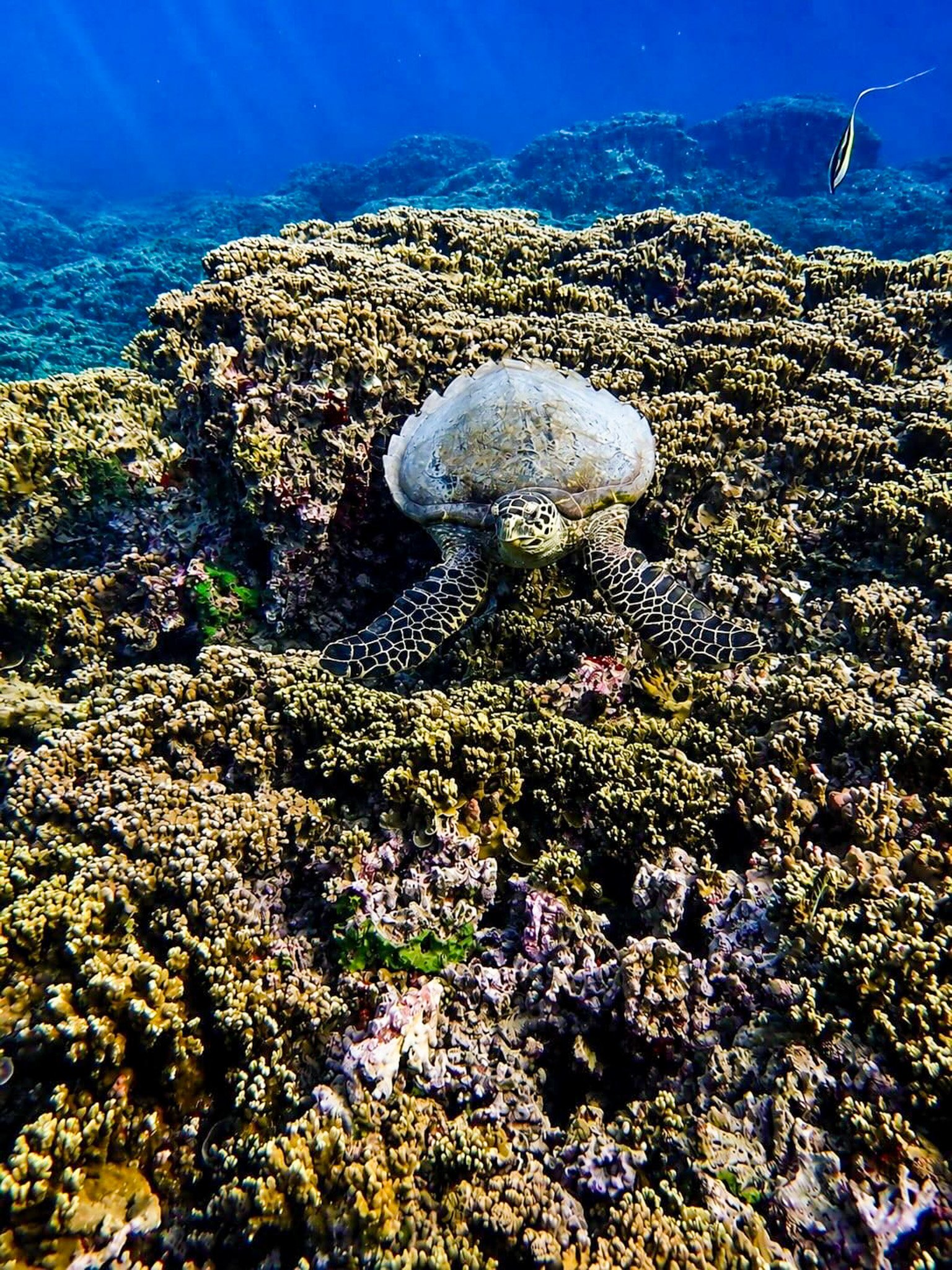
In Bora Bora, the snorkeling and scuba was outstanding. Our friend Max and his daughter did several dives on the trip. Absolutely magical.
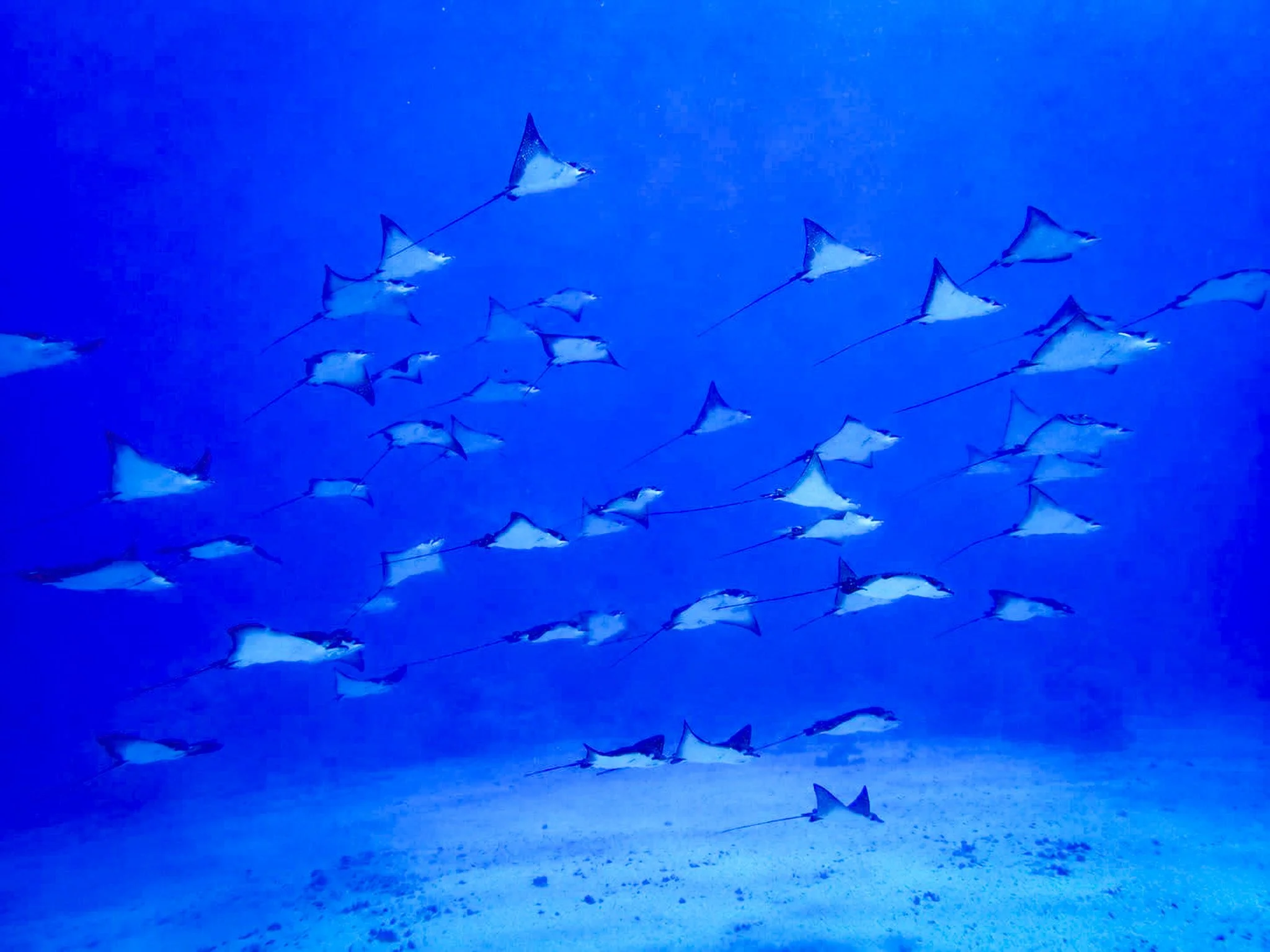
Over 50 eagle rays!
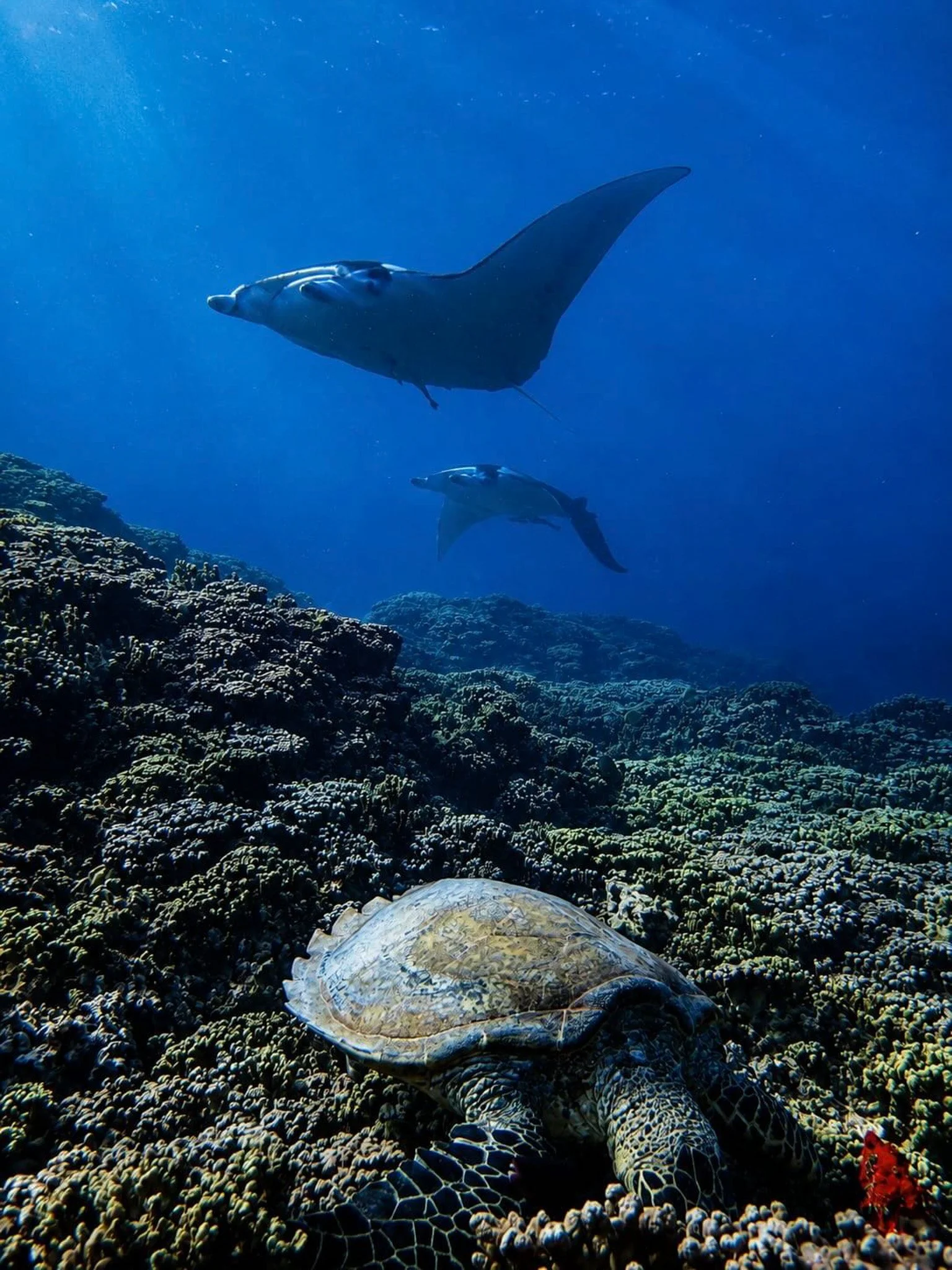
Sea turtle and a gigantic manta ray.
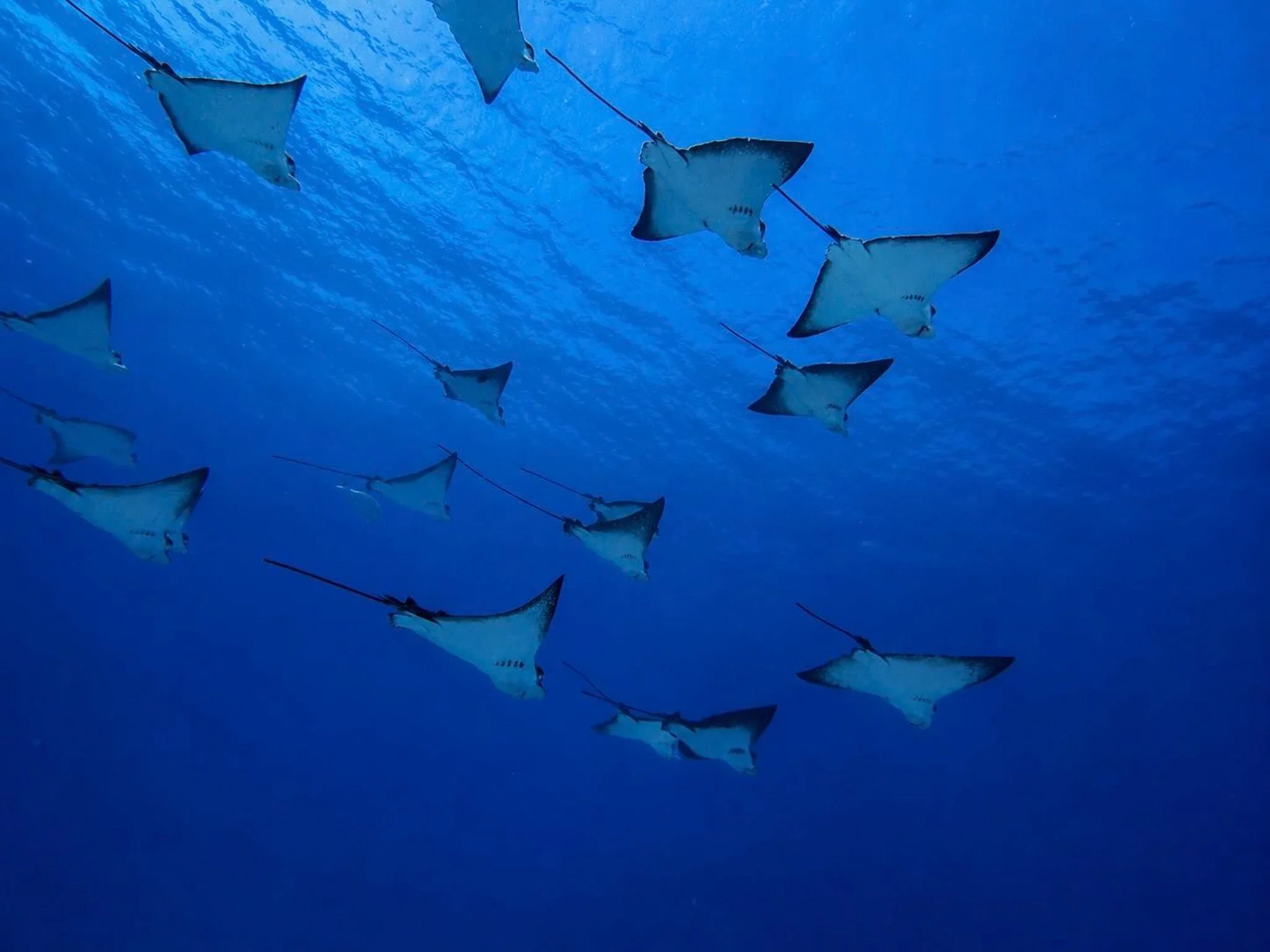
Eagle rays.
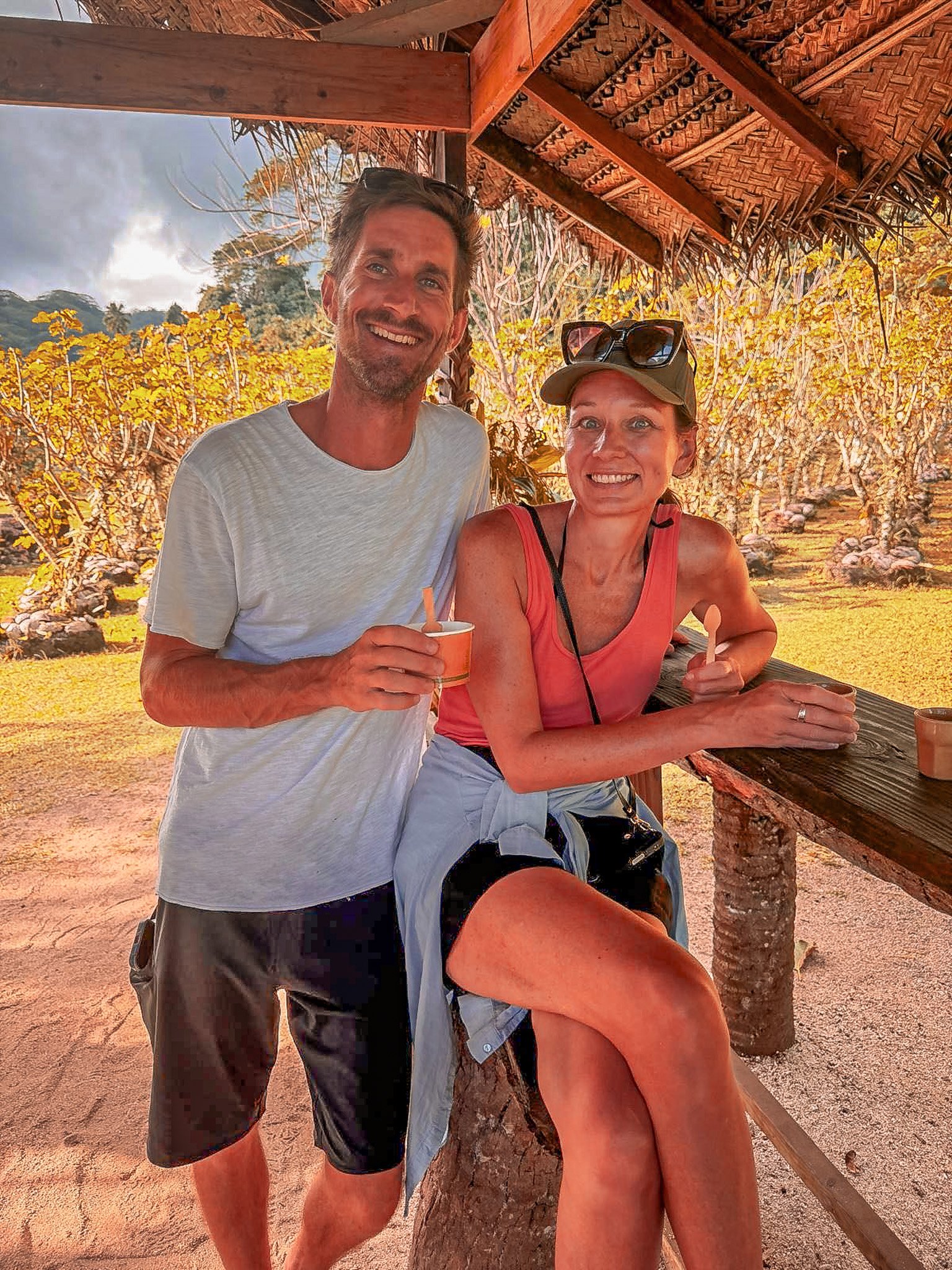
Our ridiculously amazing Skipper Uros, and his partner Nina. We were grateful they joined us from Slovenia. Uros is a former professional sailor and has participated in all kinds of races around the world from crossing the Atlantic to racing around the Mediterranean, Carribean, and more (and he’s never been seasick!). He now works at a yacht management firm based in Slovenia. Nina was our all star support team on the boat and after hearing stories about their garden and experiencing their Baltic cooking magic we think her recipes would make a very special cookbook. I mean, how many people buy 100 kg of fresh tomatoes from a granny’s farm down the street and stay up to midnight for a few nights in a row to make dozens of jars of tomato sauce. I only wish we lived closer!
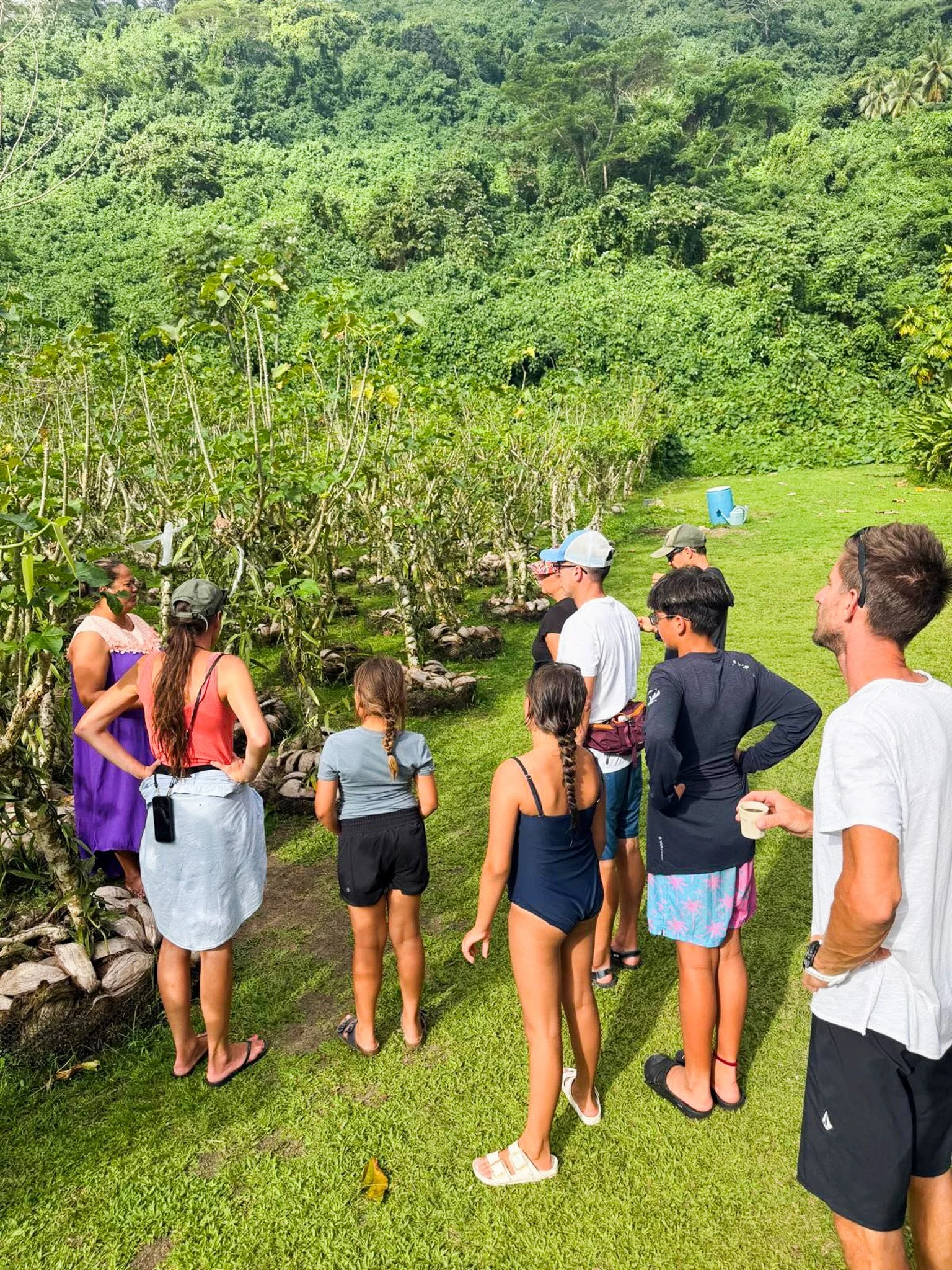
On our last night we stayed again at the island of Taha’a. We visited a vanilla farm and it was very educational - my knowledge before was limited to enjoying the flavor and that was it. We learned it takes nine months from flower to pod, and then another six plus months for the pod to dry out. About three pods of vanilla retails for around $25, which comes out to around $500 a pound! It’s so expensive given the extraordinary amount of labor that goes into cultivating vanilla. In this picture you can kind of see the vanilla vine growing on a tree, and then coconut shells are used at the base of the tree I believe to trap moisture. At this family’s farm they of course sold vanilla ice cream which was very good. One interesting fact is vanilla is originally from Mexico.
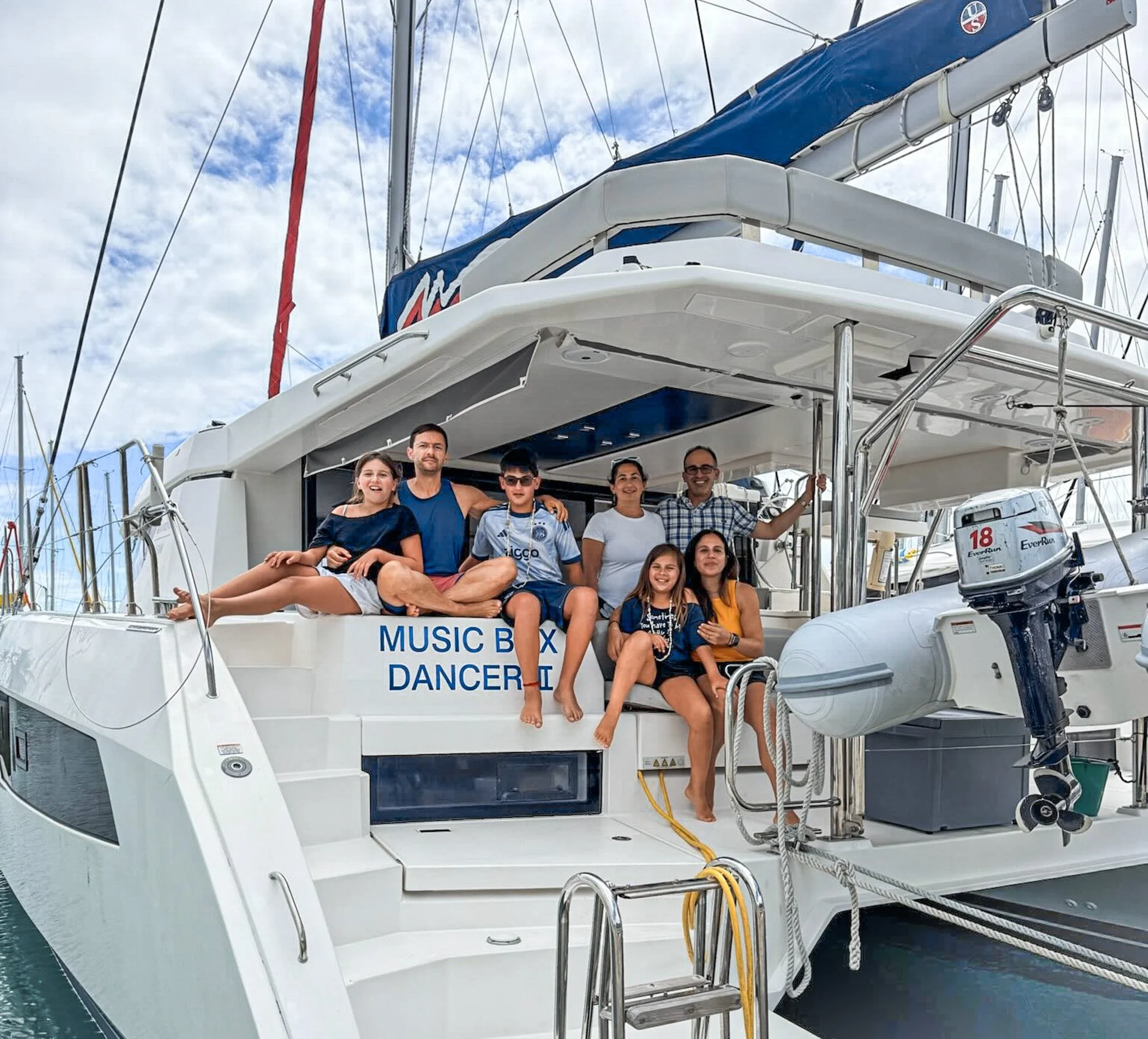
Here we all are in the beginning of the trip. To the right is the little dingy hanging off the back.
So many special memories of our trip here. What stood out to me was the slow pace of life we experienced here, and I look forward to visiting hopefully again.
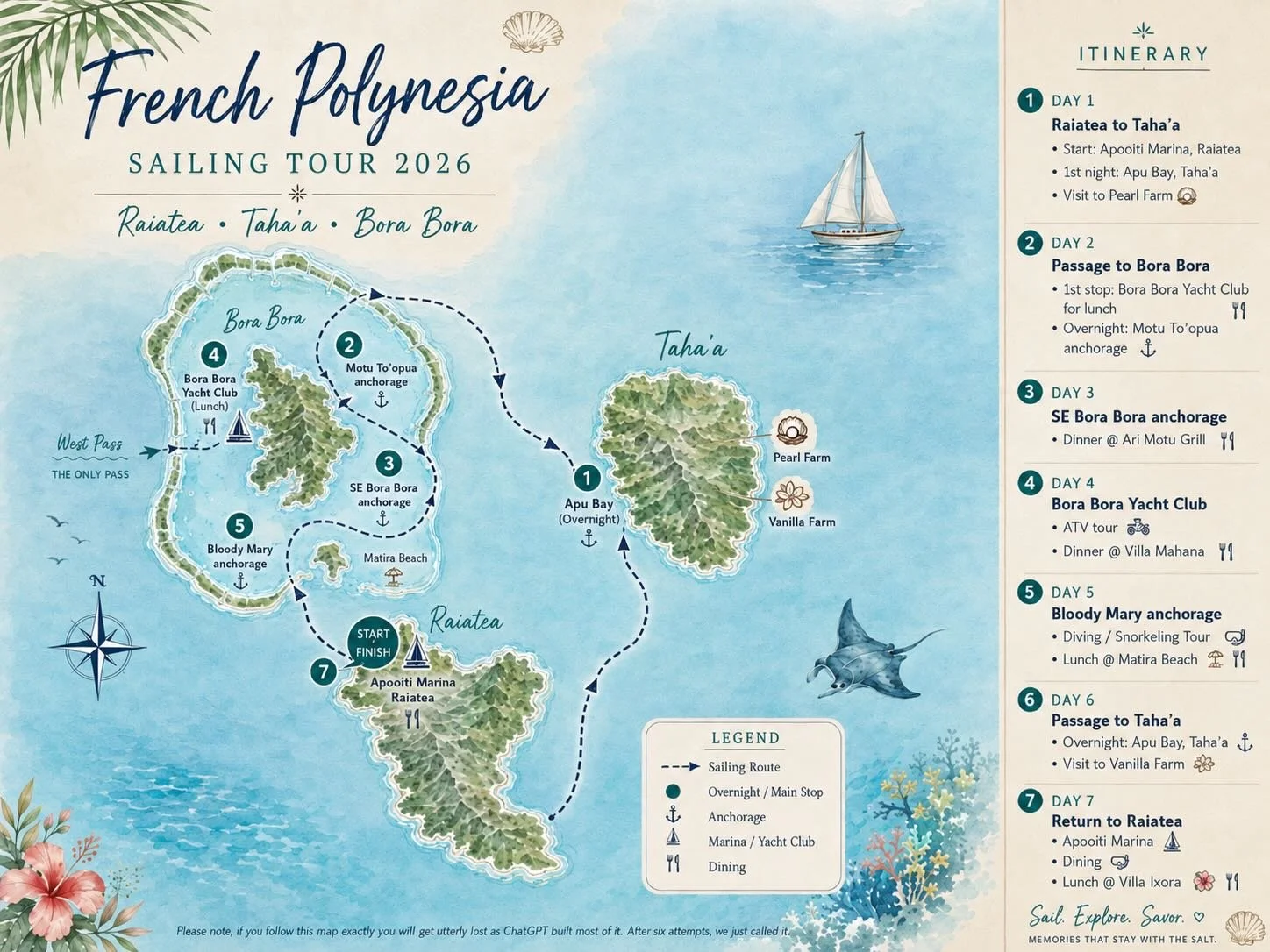
A general overview of our itinerary. We flew into Tahiti and then took an Air Tahiti flight to Raiatea where we began our adventure, so Tahiti is not on the map above.